
Federal Vetting Is More Than a Background Check
- Suitability for federal employment.
- Fitness for contractor work.
- Credentialing for access to federal systems or facilities.
- Public Trust review.
- Eligibility for access to classified information.
- Agency-specific screening.
- Drug testing, medical review, or polygraph requirements.
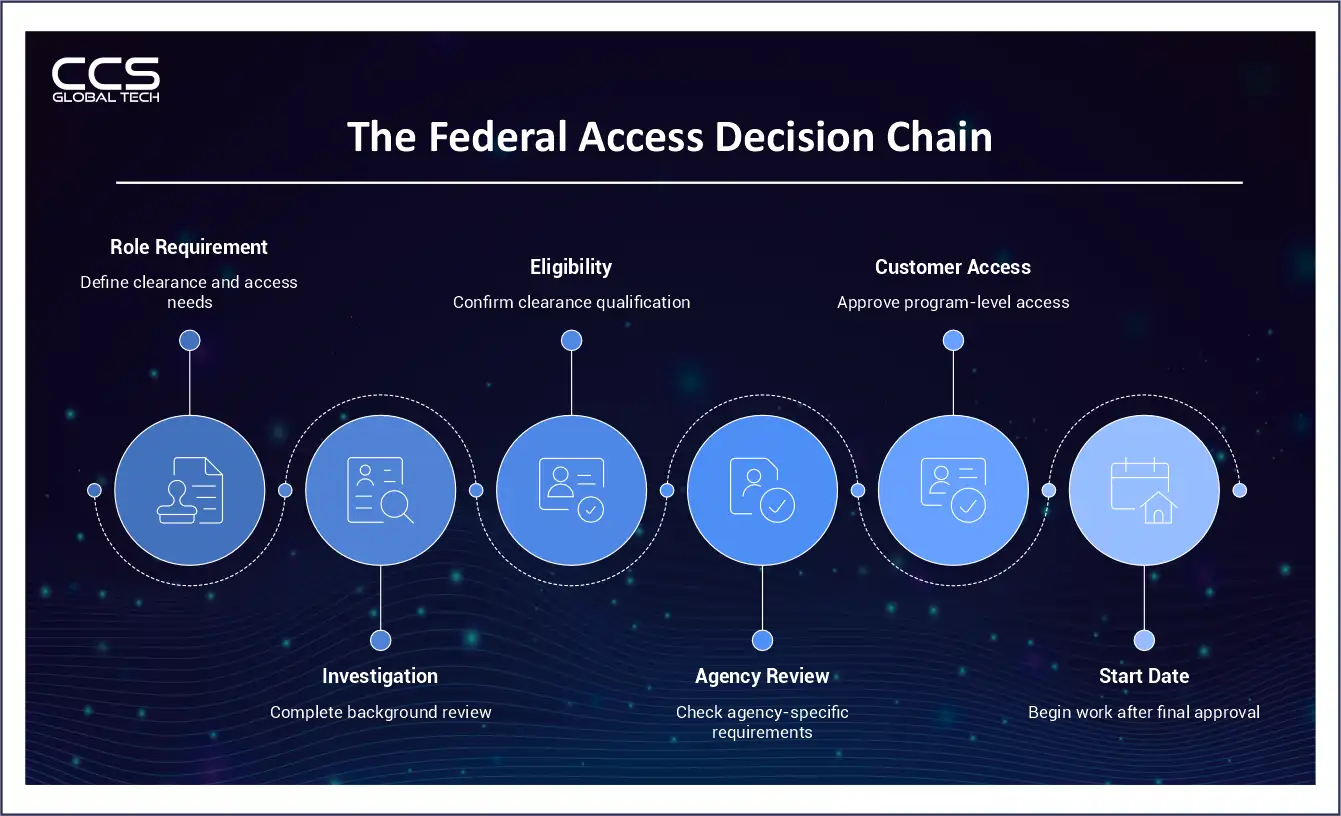
- What investigation or eligibility level does the position require?
- Must the candidate hold it before submission?
- Is interim access permitted?
- Can the candidate perform unclassified work while processing continues?
Current Timelines Still Require Workforce Planning
Preliminary Decisions Help, but They Are Not Guaranteed
- Does the contract permit interim access?
- Which duties can begin before final eligibility?
- Does the facility require final access before entry?
- Are unclassified work packages available?
- Who owns the preliminary decision?
- What happens if interim access is not granted?

Clean Applications Prevent Avoidable Delay
- Full address history with exact dates
- Employment history and supervisor details
- Education records
- Foreign travel dates and destinations
- Foreign contacts where reporting applies
- Police or court records
- Current credit information
- Military service records
- Names and contact details for references
Compliance Begins Before Candidate Submission
- Labor category requirements
- Education and experience minimums
- Citizenship restrictions
- Required clearance and access level
- Investigation recency requirements
- DoD 8140 or contract-specific certifications
- Worksite and remote-work rules
- Travel requirements
- Drug screening
- Customer approval steps
- Organizational conflict restrictions
- Start-date conditions
Reciprocity Should Help, but Contractors Still Face Friction
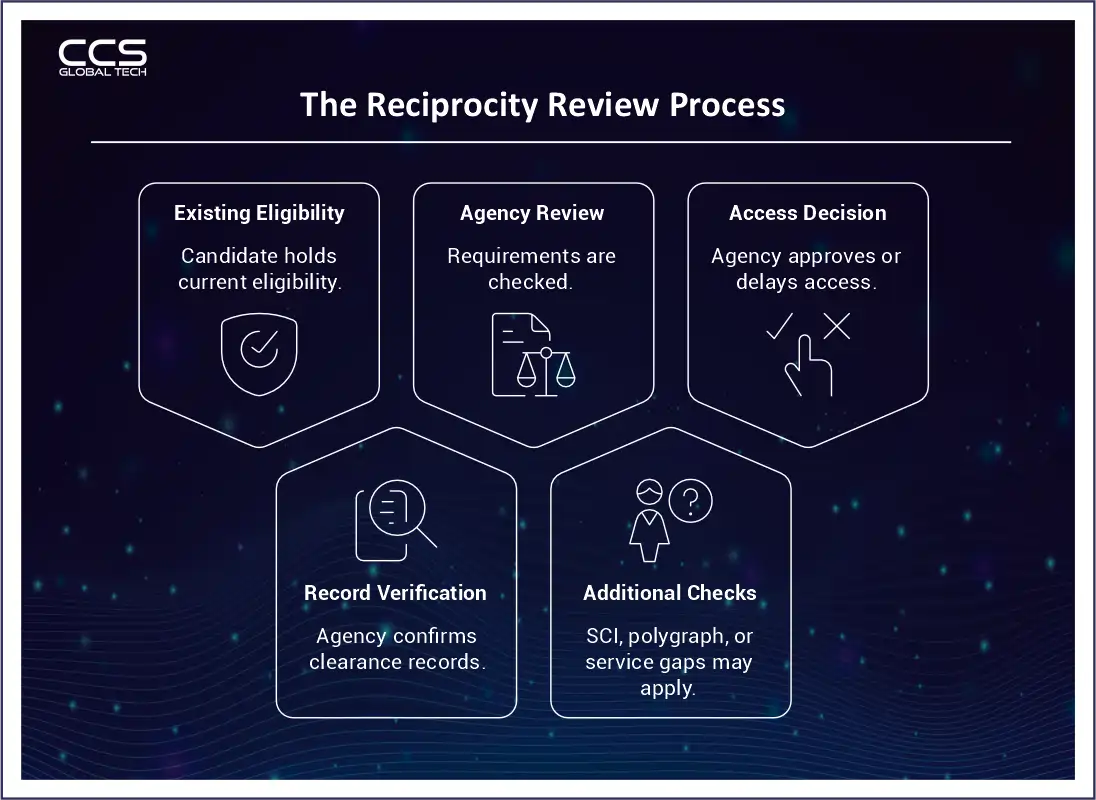
- Current eligibility level
- Owning or servicing agency
- Investigation type and close date
- Current access status
- Time since the person last held a cleared position
- SCI or polygraph status
- Whether the new customer accepts reciprocity
- Any known break in service
Technology Modernization Is Still Incomplete
Quality Still Determines Contract Performance
- Technical assessment tied to the actual work
- Verification of certifications
- Employment and project history review
- Clearance status confirmation
- Behavioral interview
- Mission and workplace fit assessment
- Compensation and location alignment
- Availability confirmation
- Reference checks where appropriate

Build a Hiring Process That Handles Delay
- Recruit before the vacancy becomes urgent.
- Maintain backup candidates for high-risk roles.
- Separate cleared and uncleared work where the contract allows it.
- Give candidates weekly updates, even when no status has changed.
- Track time spent in each processing stage.
- Escalate missing information quickly.
- Coordinate recruiters, program managers, security officers, and customers.
- Keep warm talent pools for recurring labor categories.
- Review candidate drop-off and offer-decline reasons.
- Forecast attrition before option years and recompetes.
How CCS Global Tech Supports Federal Staffing?
FAQs
Q1. How can federal hiring teams speed up vetting without increasing risk?
A. Federal hiring teams can move faster by confirming role requirements early, checking clearance fit before interviews, collecting complete candidate information, and keeping recruiters, program leaders, and security teams aligned from the start.
Q2. Why does vetting often slow down federal hiring?
A. Vetting slows down when clearance requirements are unclear, candidate records are incomplete, systems do not share enough information, or hiring teams wait too long to involve security and compliance stakeholders.
Q3. What should be checked before a cleared candidate moves forward?
A. Teams should confirm clearance level, investigation status, polygraph requirements, citizenship, certifications, location, work history, availability, and whether the candidate meets the contract labor category.
Q4. How does clearance reciprocity help federal hiring?
A. Clearance reciprocity can help qualified candidates move faster when a prior clearance or vetting decision is accepted instead of starting the process again. It saves time, reduces duplicate work, and supports faster onboarding.
Q5. Why do clearance reciprocity issues still happen?
A. Reciprocity issues can happen when agency systems lack complete data, records are inconsistent, requirements differ by agency, or hiring teams cannot quickly verify whether a prior decision meets the new role’s needs.
Q6. How can recruiters reduce delays in cleared hiring?
A. Recruiters can reduce delays by asking the right clearance questions early, submitting complete candidate profiles, matching resumes to labor categories, and avoiding candidates who do not meet the must-have requirements.
Q7. What role do program managers play in faster federal hiring?
A. Program managers help by clarifying role priorities, reviewing resumes quickly, separating must-have skills from nice-to-have skills, and giving fast interview feedback so strong candidates do not drop out.
Q8. How can security teams support a smoother vetting process?
A. Security teams can help by validating clearance details early, flagging documentation gaps, explaining agency-specific requirements, and guiding recruiters before candidates reach the offer stage.
Q9. How can federal contractors avoid losing candidates during vetting?
A. Contractors should communicate regularly, explain each step, set realistic expectations, and move quickly when documents or decisions are needed. Long silence during vetting often pushes candidates toward other offers.
Q10. What is the right balance between speed and compliance?
A. The right balance is a structured process that moves quickly but does not skip required checks. Speed comes from preparation, clean documentation, and clear ownership, not from cutting corners.