
What Employers Look for in a Security Background Check?

What Employers Look for in a Security Background Check
In today’s high-stakes hiring landscape, security background checks serve as the critical filter between promising candidates and proven performers. With 95% of U.S. employers now conducting some form of pre-employment screening, a figure that has risen steadily as workplace risks multiply, these evaluations have never been more essential.
For organizations handling sensitive data or pursuing federal contracts, where private sector contractors manage approximately two-thirds of the nation’s 4.9 million active security clearances, the results can make or break contract awards and operational security.
Employers approach these checks methodically prioritizing elements that reveal not just past actions but future reliability. They examine patterns of behavior, consistency across records, and evidence of accountability.
This comprehensive 2026 guide outlines the key components employers scrutinize, drawing on the most current statistics, regulatory updates, and practical insights. Understanding these priorities equips hiring managers to make informed decisions while staying compliant.

What is a Security Background Check?

A security background check is a comprehensive evaluation process employers use to verify a candidate’s suitability for roles involving access to sensitive information, systems, or facilities. Unlike standard employment screening, security checks dig deeper into criminal records, financial history, personal associations, and behavioral patterns that could pose risks to organizational safety or national security.
These assessments typically combine public records searches, database queries, direct verifications, and interviews, following standardized frameworks like those from the Defense Counterintelligence and Security Agency (DCSA) for federal roles.
The goal extends beyond identifying red flags, it confirms trustworthiness, accountability, and alignment with mission-critical responsibilities. For cleared positions, results directly determine eligibility for security clearances ranging from Confidential to Top Secret/SCI levels.

Criminal History: Establishing Baseline Trust
Criminal record reviews anchor nearly every security background check, with 94% of employers citing workplace safety as their primary concern. These searches aggregate data from federal, state, county, and multi-jurisdictional databases, capturing convictions, arrests, pending cases, warrants, and protective orders.
Standard lookback periods cover seven years for most private roles, extending to 10 years or lifetime for positions involving vulnerable populations or federal funding. High-security federal investigations often review entire adult histories.
Employers distinguish between isolated incidents and behavioral patterns. A single misdemeanor from 15 years prior, particularly if followed by rehabilitation evidence like community service or steady employment, rarely disqualifies alone.
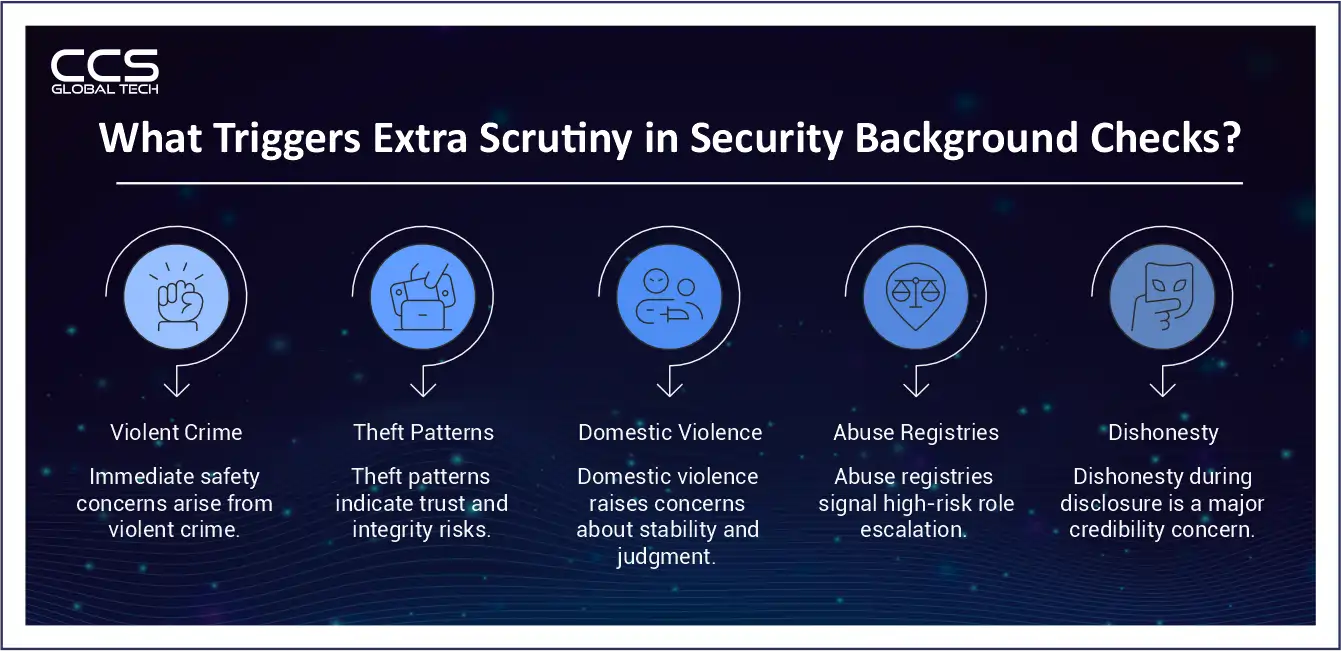
However, escalating offenses such as multiple theft convictions or violent crimes- signal ongoing risk to colleagues, assets, or classified information. Specialized registries receive mandatory attention: sex offender lists, domestic violence databases, and child/adult abuse/neglect records prompt immediate escalation, especially for roles near defense installations or government facilities.
Roughly one in three American adults between 70 and 100 million individuals, carries a criminal record of some kind, underscoring the need for nuanced adjudication.
This prevalence has fueled expanded “ban the box” legislation and fair chance hiring mandates, now active in 37 states and Washington, D.C. These laws require employers to prove any criminal history directly relates to job duties and conduct individualized assessments, reducing blanket rejections and litigation risks.
Practical Application: Consider a systems administrator candidate for a defense subcontract. The check surfaced a 2008 misdemeanor theft charge tied to a family financial dispute that resolved without further incidents.
References from subsequent employers highlighted exemplary performance and trustworthiness. The hiring team documented the context, confirmed no pattern existed, and proceeded, enabling the candidate to contribute immediately to a time-sensitive network security upgrade.
Federal contractors encounter heightened rigor through DCSA’s Tier 3 investigations for Secret-level clearances, which average 6-9 months and include FBI fingerprint-based federal crime searches.
Undisclosed arrests frequently trigger denials under Adjudicative Guideline E (personal conduct). However, full transparency combined with mitigating factors such as time elapsed and post-incident stability, results in successful appeals approximately 68% of the time.
What Triggers Extra Security in Security Background Check

Employment Verification: Validating Professional Claims

Resume inaccuracies undermine hiring decisions, with 76% of hiring leaders identifying falsified employment histories and 45% detecting identity discrepancies in recent cycles. Employers move beyond basic confirmations, contacting previous supervisors to verify exact titles, employment dates, core responsibilities, performance ratings, and reasons for departure.
Automated HR email responses no longer suffice; direct manager insights reveal whether a candidate truly “led enterprise-wide security implementations” or provided junior support.
Education verification similarly confirms degrees, attendance periods, grade point averages (if advertised), and professional certifications essential to security roles, including CISSP, CISM, CompTIA Security+, or GIAC credentials.
In global hiring contexts relevant to U.S. contractors with offshore teams, inaccuracy rates climb: 34% of experience claims from certain international regions prove exaggerated, contributing to an overall resume error rate of 53%.
Critical Data Point: Self-employment verifications fail 40% of the time, often due to absent documentation, inconsistent timelines, or unverifiable client references. The 2026 shift emphasizes tangible proof of impact project outcomes, team sizes managed, or technologies deployed aligning with federal SF-86 form requirements for cleared positions.
Practical Application: An IT services provider extended a verbal offer to a purported senior DevSecOps engineer claiming five years in leadership. Verification with listed supervisors confirmed only 18 months in a supervisory capacity, with no evidence of the described scale of deployments.
The role ultimately went to a candidate with fully corroborated experience, averting six months of ramp-up delays, compliance audits, and $180,000 in potential productivity losses.
Cleared roles amplify scrutiny: employment gaps exceeding 24 months invite questions under Adjudicative Guidelines B (foreign influence) and E (personal conduct). SF-86 submissions demand pixel-perfect alignment across all records; even minor date discrepancies can halt processing faster than disclosed misdemeanors.

Financial History: Gauging Vulnerability to Coercion

Financial assessments protect against blackmail risks inherent in roles accessing classified networks or financial systems. Checks draw from credit bureaus (Experian, TransUnion, Equifax) to review delinquencies, bankruptcies, liens, civil judgments, garnishments, and tax liens.
Employers flag unsustainable debt loads (exceeding 50% debt-to-income ratio), chronic late payments across accounts, or indicators of compulsive gambling like bounced casino checks.
Guideline F, Financial Considerations, is consistently cited as one of the most common issues in security clearance denials and revocations, particularly when applicants fail to demonstrate responsible debt resolution efforts.
Practical Application: A mid-level IT contractor applying for Secret clearance disclosed $25,000 in outstanding IRS debt on the SF-86, attributing it to a sudden job loss and attaching a formal payment plan plus supporting correspondence. This proactive approach reversed an initial Statement of Reasons for denial, securing clearance approval within six months and enabling participation in a multimillion-dollar subcontract.
FCRA regulations restrict financial data to scenarios with direct job relevance, such as fiduciary duties or access to sensitive financials, preventing misuse.

Identity Verification and Digital Footprint Analysis
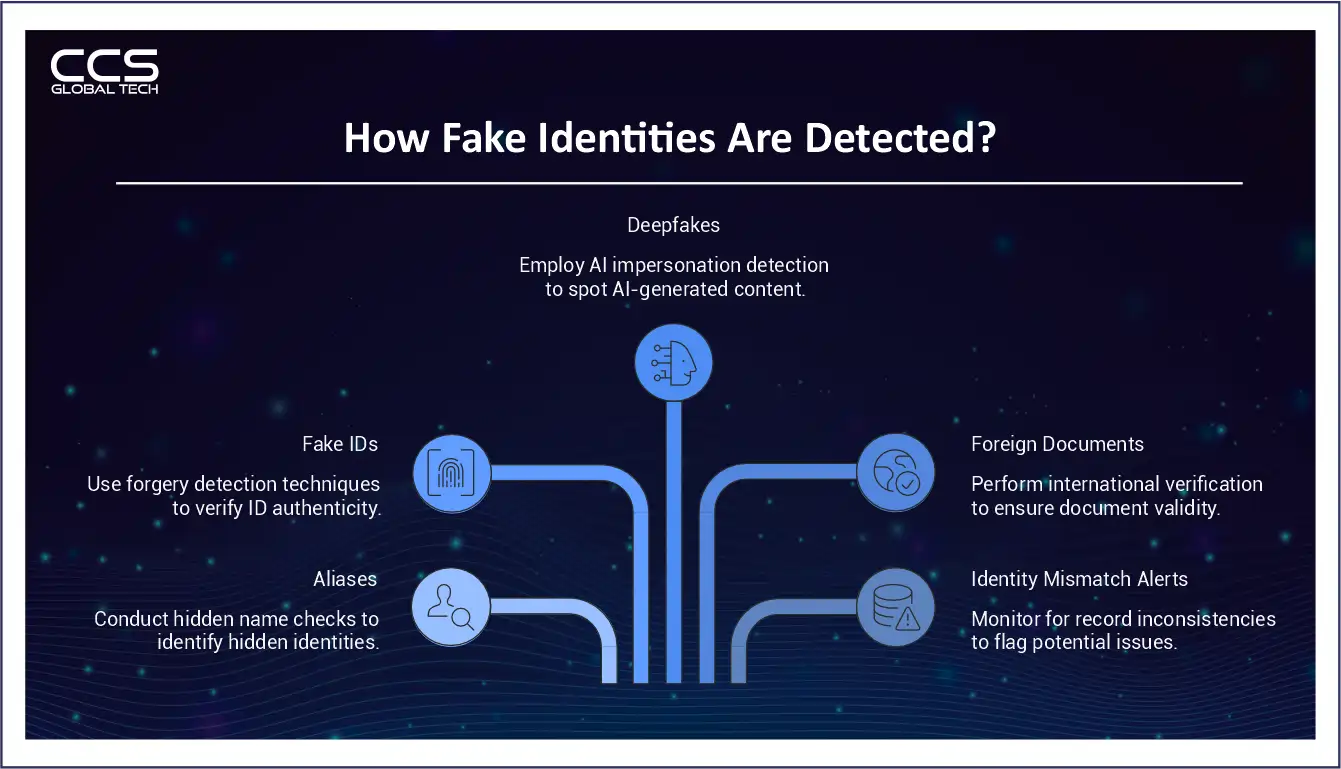
Identity fraud represents an escalating threat, with 76% of chief human resources officers reporting falsified personal details during screening. Contemporary methods incorporate biometric facial recognition, document authentication via NFC chips, and liveness detection to thwart deepfakes.
93% of leaders believe organizations that successfully scale AI agents within the next 12 months will gain a competitive advantage.
Public-facing digital footprint reviews limited to openly accessible content, assess risks like endorsements of extremism, glorification of illegal substances, or careless disclosures of security practices. Private messages remain off-limits under EEOC and privacy laws.
Emerging Trend: 82% of HR executives have adopted continuous monitoring programs or periodic rescreening protocols to track evolving risks post-hire.
Practical Application: During candidate screening for a logistics security role, a public social media audit revealed stark inconsistencies between the applicant’s LinkedIn profile claiming a decade of cleared experience and posts describing unrelated retail work. This early intervention spared the employer $90,000 in sponsorship fees, onboarding expenses, and potential DCSA compliance violations.
High-security positions particularly emphasize resolution of aliases, foreign-issued identifications, and multi-jurisdictional name matches.
How Fake Identities Are Detected

Drug and Substance Use Screening

Pre-employment drug screens test urine for standard panels: marijuana, cocaine, amphetamines, opiates, and phencyclidine. Federal positions enforce zero-tolerance standards regardless of state legalization. Motor vehicle records (MVR) checks apply universally to driving-related duties.
Marijuana usage correlates with 22.4% of security clearance denials, leading all substances; nondisclosure accounts for 87% of those adverse actions.
Global Perspective: International background screens detect 9% undisclosed criminal records associated with substance-related offenses.
Practical Application: A transportation security candidate’s MVR disclosed two recent speeding violations amid otherwise clean history. The employer required completion of an eight-hour defensive driving course, after which a recheck confirmed compliance, balancing risk management with talent retention.
Cybersecurity and cleared roles mandate current certification status; lapsed Security+ or CISSP credentials necessitate renewal before proceeding.

Specialized Requirements for Cleared and Security-Critical Positions

Security clearance processes extend beyond standard checks. Tier 5 (Top Secret) investigations incorporate foreign travel histories, neighbor and reference interviews, spousal/cohabitation reviews, and financial deep dives. Continuous vetting now encompasses all 4.9 million cleared personnel, flagging incidents in real time.
Cybersecurity-specific elements include credential audits, public GitHub repository scans for inadvertent leaks, and Adjudicative Guideline B assessments of foreign national contacts particularly those tied to adversarial nations. Professional licenses, patents, and MVRs round out the package for specialized functions.

Continuous and Periodic Vetting Practices

Initial screening marks the beginning, not the end. 82% of employers rescreen upon promotions, relocations, or at fixed intervals (every 2-5 years). Federal continuous evaluation systems integrate criminal, financial, and foreign contact databases for automated alerts.

Navigating Compliance and Legal Frameworks

The Fair Credit Reporting Act (FCRA) mandates written candidate consent, pre-adverse action notices, and copies of investigation reports with rights summaries. Noncompliance settlements frequently exceed $50,000 per violation.
Fair chance hiring laws demand documented evidence linking findings to job necessities. Multi-state operations amplify complexity, requiring jurisdiction-specific protocols.

Strengthening Your Security Hiring Strategy

CCS Global Tech Federal Services provides compliant background screening, clearance sponsorship support, and access to pre-vetted cleared professionals. These capabilities help federal contractors achieve faster onboarding and lower compliance exposure.
So, are you excited to explore how these services fit your hiring pipeline?

FAQs

Q1- How far back do employers look during a security background check?

A- The review period depends on the role, industry, and clearance level. Many employers examine 7 to 10 years of criminal, employment, identity, and financial history, while federal clearance investigations often go deeper.

A- Many employers review credit history for signs of financial risk, including unpaid debt, collections, bankruptcies, or repeated delinquency. They are typically assessing financial responsibility rather than credit score alone.

A- Yes. Unresolved financial problems can raise concerns about reliability and judgment. However, documented repayment plans, debt consolidation, and financial recovery efforts are often viewed as positive mitigating factors. 

A- Employers pay close attention to crimes involving fraud, theft, cybercrime, violence, insider threats, or misuse of sensitive information, especially if the incidents are recent or repeated. 

A- Employers and screening providers usually confirm job titles, dates of employment, employer names, and sometimes reasons for departure. Discrepancies between the resume and verified records can trigger additional review. 

A- Some organizations review publicly available online activity to identify behavior related to harassment, threats, extremist content, or disclosure of confidential information. Screening policies vary by employer. 

A- Investigators often view dishonesty or omission as a greater concern than older incidents themselves. Full disclosure combined with evidence of stability and corrective action generally improves credibility. 

A- Common causes include incomplete forms, employment gaps, foreign travel history, unresolved financial issues, inconsistent information, and difficulty verifying records across multiple locations. 

A- Yes. Employers can withdraw conditional offers if screening results conflict with company policies, regulatory standards, or security requirements tied to the role. 

A- Continuous vetting uses automated monitoring systems to identify security-related concerns, including arrests, financial issues, or suspicious activity, after an individual has already received clearance.