
The Hiring Hurdles That Sparked Change
Cleared Talent Shortages: Where Demand Meets New Rules
Real-World Wins: Agencies Adapting Ahead of the Curve

Navigating Common Roadblocks
Steps to Adapt: A Practical Roadmap
- Revamp Job Descriptions: Delineate must-have skills (e.g., “Configure Cisco routers under simulated attack”) over vague education reqs. Eliminate mismatches upfront.
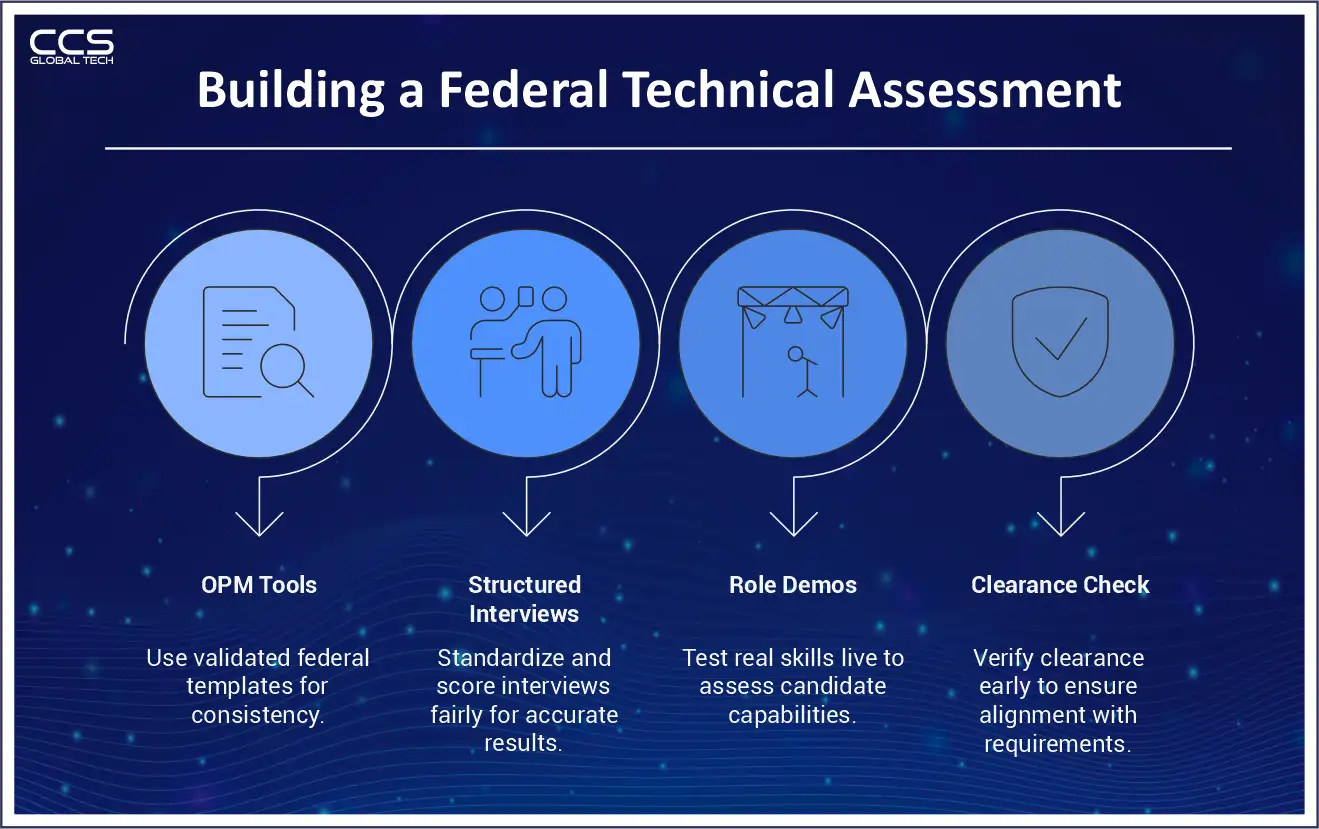
- Build Assessments: Start with free OPM resources—technical tests, structured interviews. For cleared roles, add vetting-aligned demos.
- Forecast and Pool: Submit FY2026 headcount plans to OPM/OMB for pooled actions. Target top series like 2210 for quick wins.
- Train Teams: OPM’s Federal Assessment Strategy Initiative offers sessions. Equip HR to score objectively.
- Leverage Partners: Staffing firms handle assessments, pre-vetting cleared talent to cut agency workload.
- Track Metrics: Monitor time-to-hire (aim for under 80 days) and diversity gains quarterly.
Why It Matters for Federal Missions?
Partner with CCS Global Tech for Seamless Transition
At CCS Global Tech, we’re at the forefront of this federal evolution. Our federal staffing services specialize in cleared cyber, IT, and engineering talent, pre-assessed via OPM-aligned skills tests. We’ve helped partners fill shortages despite 12% poaching risks, bundling sponsorships, flex, and competitive comp.
Ready to adapt and discuss your agency’s needs, whether pooled hiring, custom assessments, or talent pipelines?
FAQs
Q1: What changes did OPM introduce for skills-based hiring in 2025?
A – OPM’s 2025 Merit Hiring Plan requires agencies to prioritize technical assessments over self-assessments and degree filters. Agencies must phase out occupational questionnaires by 2027 and use job-related evaluations to rank candidates on proven ability.
Q2: How will phasing out self-assessments impact federal hiring?
A: Self-ratings often inflate qualifications. Replacing them with structured technical evaluations improves ranking accuracy and reduces mismatches during interviews.
Q3: What types of technical assessments should agencies use?
A: Agencies should use role-specific tests, scenario-based simulations, structured interviews, and validated OPM assessment tools aligned to the job series and grade level.
Q4: How does skills-based hiring improve time to hire?
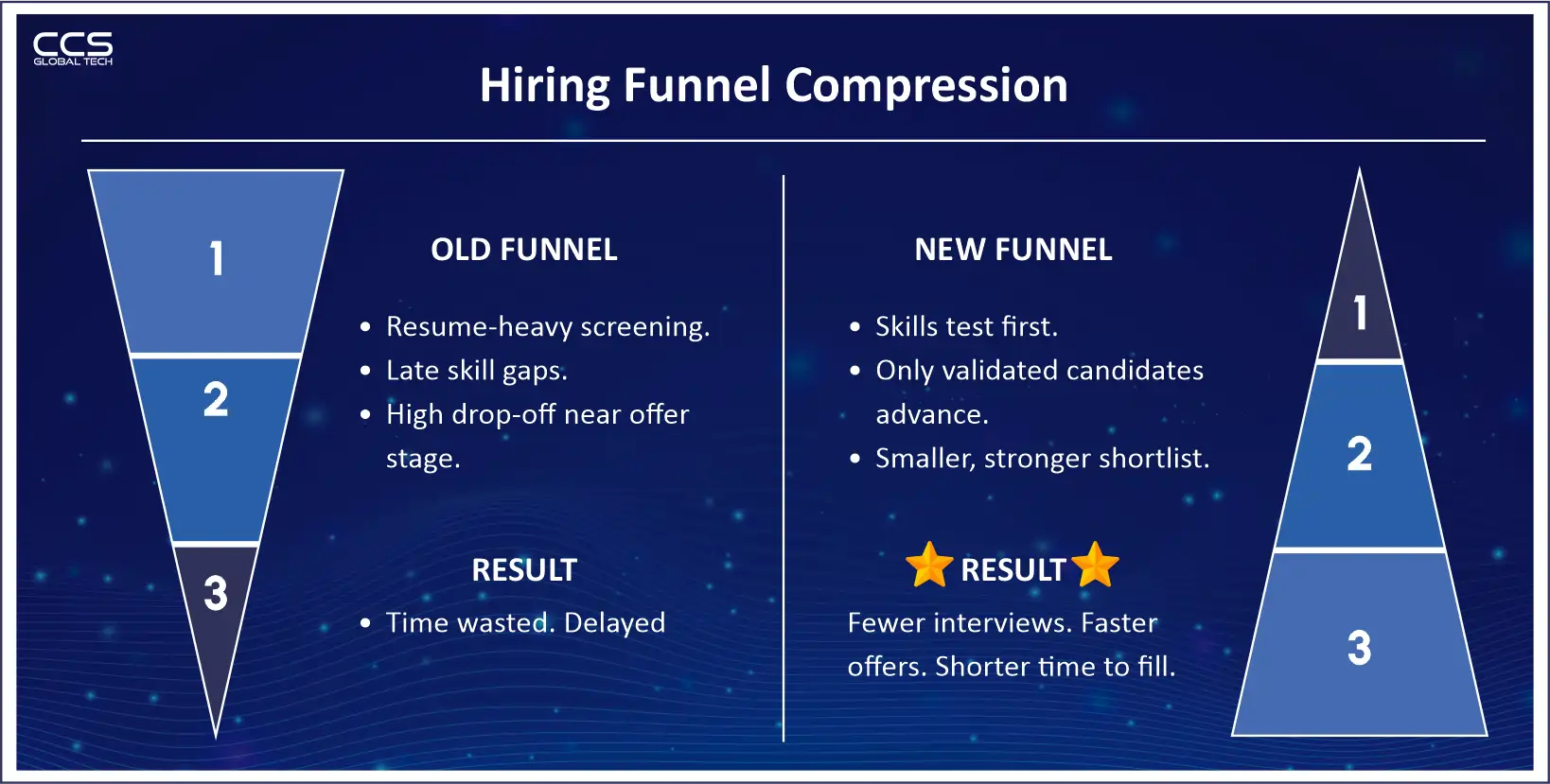
A: Early validation narrows the candidate pool faster. Managers interview fewer, better-qualified applicants, which shortens screening cycles and reduces offer fallout.
Q5: How should agencies update job descriptions under the new rules?
A: Replace vague education requirements with clear skill statements tied to real tasks. Focus on what the candidate must perform, not where they studied.
Q6: How does skills-based hiring affect cleared cybersecurity roles?
A: Technical testing combined with early clearance validation ensures candidates meet both competency and contract requirements, reducing delays in high-demand cyber positions.
Q7: What role does the Chance to Compete Act play in this shift?
A: The Act supports merit-based hiring by reducing unnecessary degree requirements and expanding access to candidates with demonstrated skills.
Q8: How can agencies prepare HR teams for the transition?
A: Provide structured interview training, standardized scoring frameworks, and access to OPM’s Federal Assessment Strategy resources to ensure objective evaluation.
Q9: How can agencies measure success under skills-based hiring?
A: Track time to hire, offer acceptance rates, diversity metrics, and retention performance quarterly to assess improvement.
Q10: What challenges should agencies expect when implementing skills-based hiring?
A: Scaling assessments across departments requires coordination, training, and alignment with clearance and labor category rules.