


Key Insights for Cleared Candidates
Insight 1: The Market Favors Cleared Talent (But Not in the Way You Think)
- The U.S. government and its technology ecosystem are driving 7–10% annual growth in demand for cleared tech talent, with cybersecurity roles alone projected to grow 31% through 2029.
- At the same time, the number of Americans holding active security clearances has declined by nearly one million since 2013, even as classified workloads have increased.
- On any given day, tens of thousands of cleared roles sit unfilled, largely because the pipeline of newly cleared professionals cannot keep pace with federal and defense‑contracting demand.
What this means for you?
- Real‑world experience in classified environments
- Familiarity with SCIF‑type workflows or secure operations, and
- A track record of delivering under mission‑critical constraints
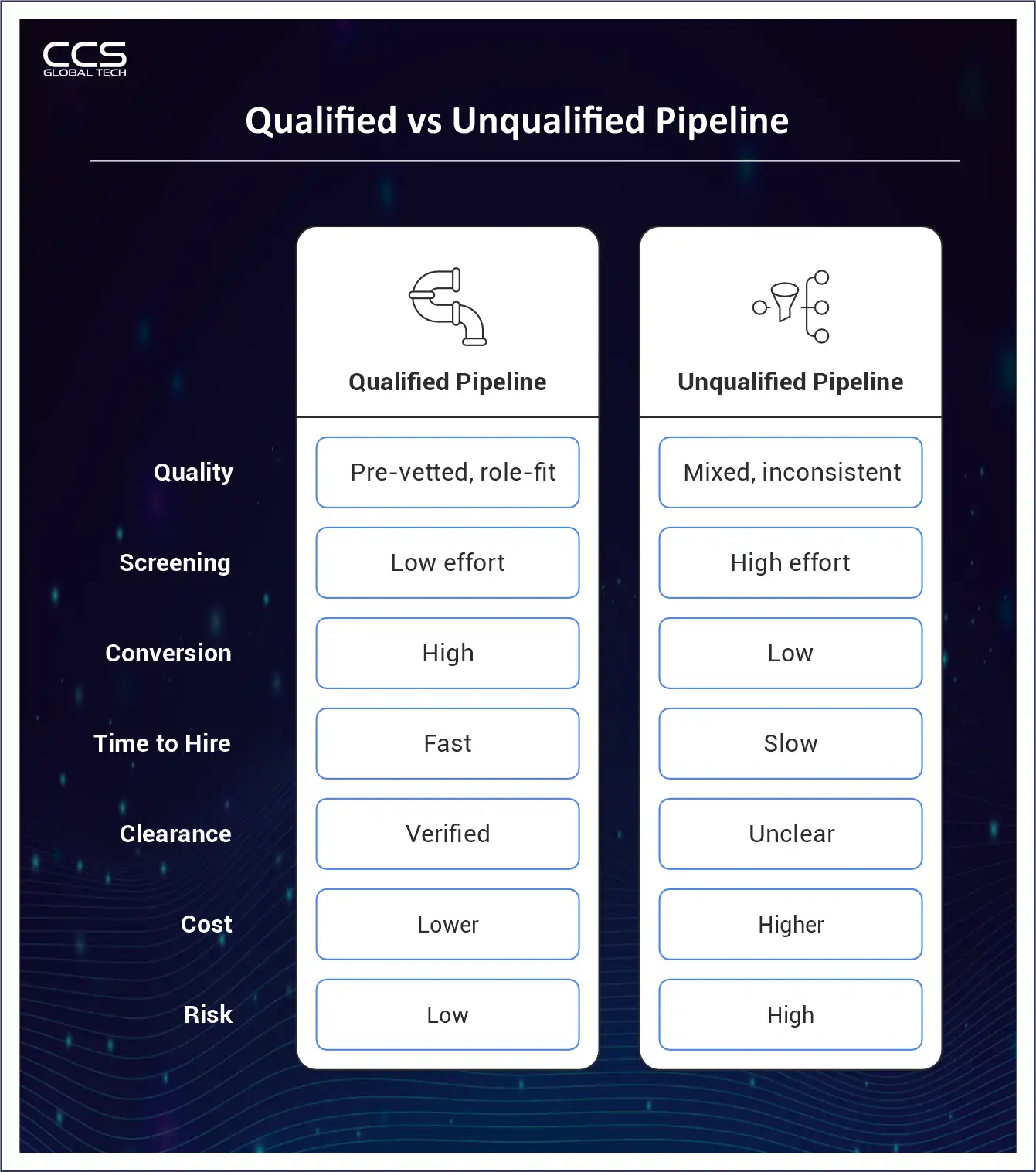
Insight 2: Mission Impact Matters More Than Perks
A real‑world example
- First‑hand exposure to real‑time threat‑indicator pipelines
- Direct collaboration with government‑owned cyber operations teams, and
- A clear line of sight from their daily work to national‑security outcomes.
What cleared candidates actually want?
- Mission‑driven work
Candidates want to see how their daily tasks feed into larger objectives whether it is defending critical infrastructure, protecting sensitive intelligence, or enabling cyber‑enabled kinetic operations. - Autonomy within structure
Cleared professionals value decision‑making authority and technical ownership. They want to solve problems, not just attend meetings about them. This is why roles that emphasize hands‑on design, incident response, or threat modeling are consistently more attractive than generic “support” titles. - Growth that keeps pace with ambition
The best cleared talent is not looking for “stability” in the traditional sense; they want continuous learning, certifications, and opportunities to move into leadership or architecture tracks. Employers who invest in training, certifications, and internal mobility see higher retention among cleared professionals.

Insight 3: Your Skills Are More Valuable Than Your Title
What skills are in highest demand?
- Cybersecurity core competencies
- Threat intelligence, incident response, and SOC/CTI operations.
- Network defense and zero‑trust architecture.
- Cloud security (AWS, Azure, GCP) within classified environments.
- Emerging domains
- Machine learning and data science applied to cyber‑threat datasets.
- Quantum‑resilient cryptography and secure communications.
- Soft capabilities with hard impact
- Clear writing and briefing skills for intelligence reporting.
- Cross‑functional collaboration with analysts, engineers, and customers.

A practical implication for candidates
- Looking at portfolios, labs, and past projects rather than only resumes.
- Accepting non‑traditional backgrounds (e.g., veterans, cross‑trained IT professionals) if they can prove hands‑on capability.
- Investing in “up‑clearing” and skills‑based hiring programs rather than rigid degree requirements.
- “This is what I built.”
- “These are the systems I secured.”
- “This is the type of incident I helped resolve.”
Add Your Heading Text Here
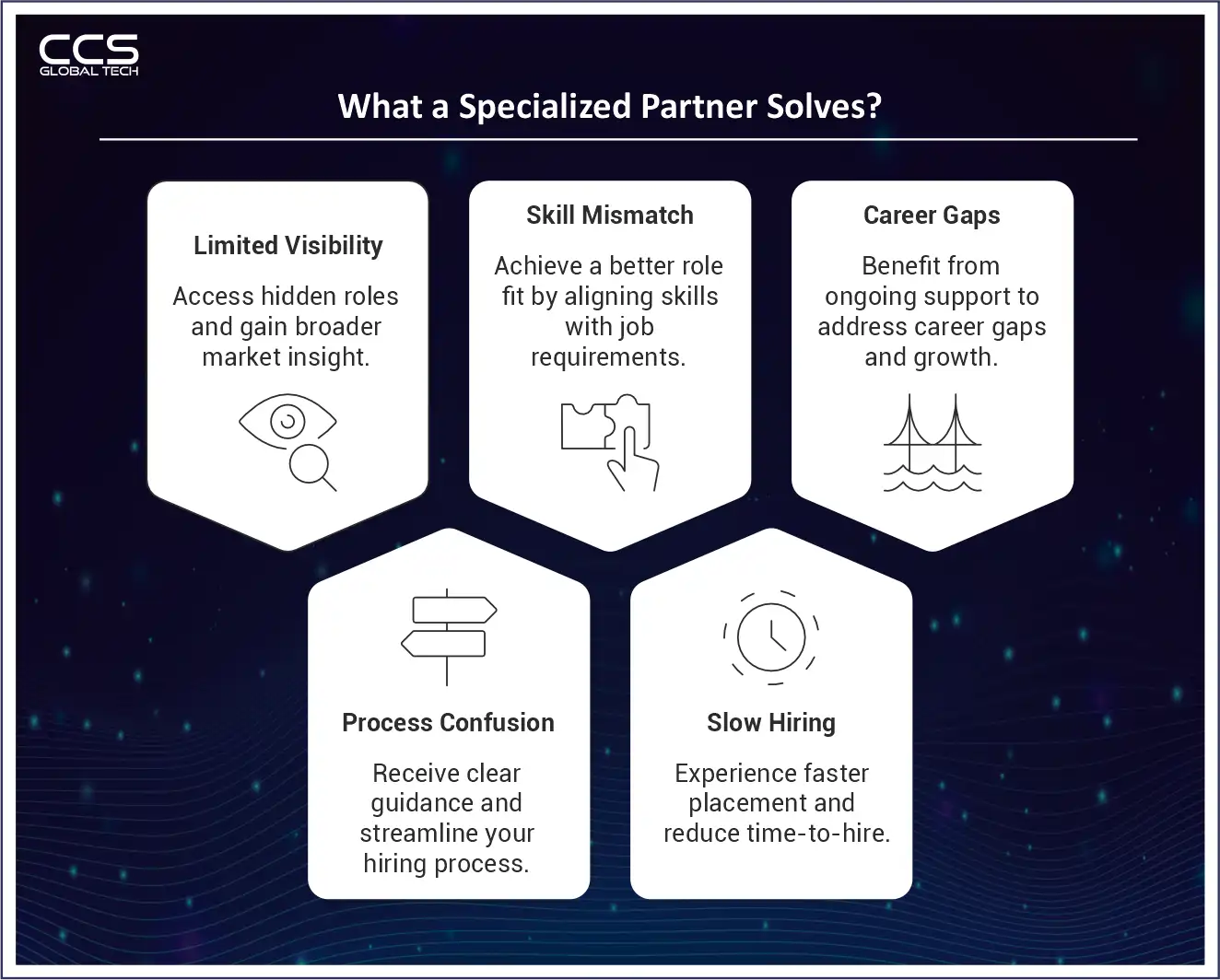
What a specialized partner can do for you?
- Access to non‑public opportunities
Many classified and intelligence‑support roles never hit public job boards. A partner with deep relationships across the DoD, IC, and federal agencies can introduce you to projects that are not visible in broad‑market searches. - Clarity on clearance pathways and timelines
Federal clearance processes are notoriously slow, often ranging from 6–24 months depending on level and backlog. A federal‑focused partner can help you:- Understand your current clearance status,
- Explore options for reactivation or upgrade paths, and
- Align your job search with realistic timelines.
- Skills‑aligned matching, not keyword matching
Too many automated systems filter out strong cleared candidates because their resumes don’t match a fixed keyword list. Specialized partners use human‑driven evaluation to match skills, mission fit, and career trajectory, making it more likely you land in a role that truly suits you. - Support beyond the first placement
For many cleared professionals, the value of a partner is not just in the first job but in long‑term career navigation helping you move into roles with higher impact, better compensation, or broader technical exposure as the market evolves.
Real‑world impact
- Applying to generic job postings and waiting months for feedback,
- Losing offers because of clearance delays or misaligned expectations, or
- Staying in roles that don’t stretch their skills, simply because they don’t see better options.
- Shorten their time‑to‑hire by accessing roles that are not widely advertised,
- Receive guidance on how to present their skills and experience to federal customers, and
- Gain visibility into long‑term career paths in intelligence, cyber, and technology‑enabled national‑security work.
How CCS Global Tech Federal Services Can Support Cleared Candidates?
- Access to a pre‑vetted network of federal and defense‑contracting opportunities across multiple clearance levels.
- Guidance on how to position your skills and clearance status for mission‑driven roles.
- Support in navigating the complexities of clearance timelines, reactivation, and compliance with current federal standards.
FAQs
Q1: What skills do intelligence and cyber roles expect beyond certifications?
A: Employers expect problem-solving, threat analysis, and decision-making skills. Certifications help, but applied thinking drives hiring decisions.
Q2: How important is clearance level when applying for cyber roles?
A: Clearance level directly impacts job access and salary. Higher clearances open more roles and faster hiring cycles.
Q3: Do intelligence roles require different skills than cybersecurity roles?
A: Yes, intelligence roles focus on analysis and interpretation. Cyber roles focus more on systems, defense, and threat response.
Q4: How does clearance portability affect job opportunities?
A: Clearance portability allows faster job switches between employers. This increases your mobility and bargaining power.
Q5: What hiring mistakes do cleared candidates make in cyber roles?
A: Many rely only on certifications without practical context. Employers look for real-world application and scenario experience.
Q6: How can cleared candidates stand out in intelligence roles?
A: Strong analytical thinking and clear communication set candidates apart. Explaining insights clearly is a key differentiator.
Q7: What role does experience play compared to certifications?
A: Experience in real environments carries more weight. Certifications validate knowledge, but experience proves capability.
Q8: How fast is the hiring process for cleared intelligence roles?
A: Hiring is faster than non-cleared roles due to clearance requirements. However, timelines depend on role urgency and contract needs.
Q9: What are the biggest challenges in transitioning into cyber roles?
A: Translating past experience into relevant cyber skills is the main challenge. Candidates must align their background with job requirements.
Q10: What should I do if I made mistakes on my previous SF-86?
A: Disclose and correct them during renewal. Transparency and consistency improve credibility with investigators.