


How Common Are Security Clearance Denials?
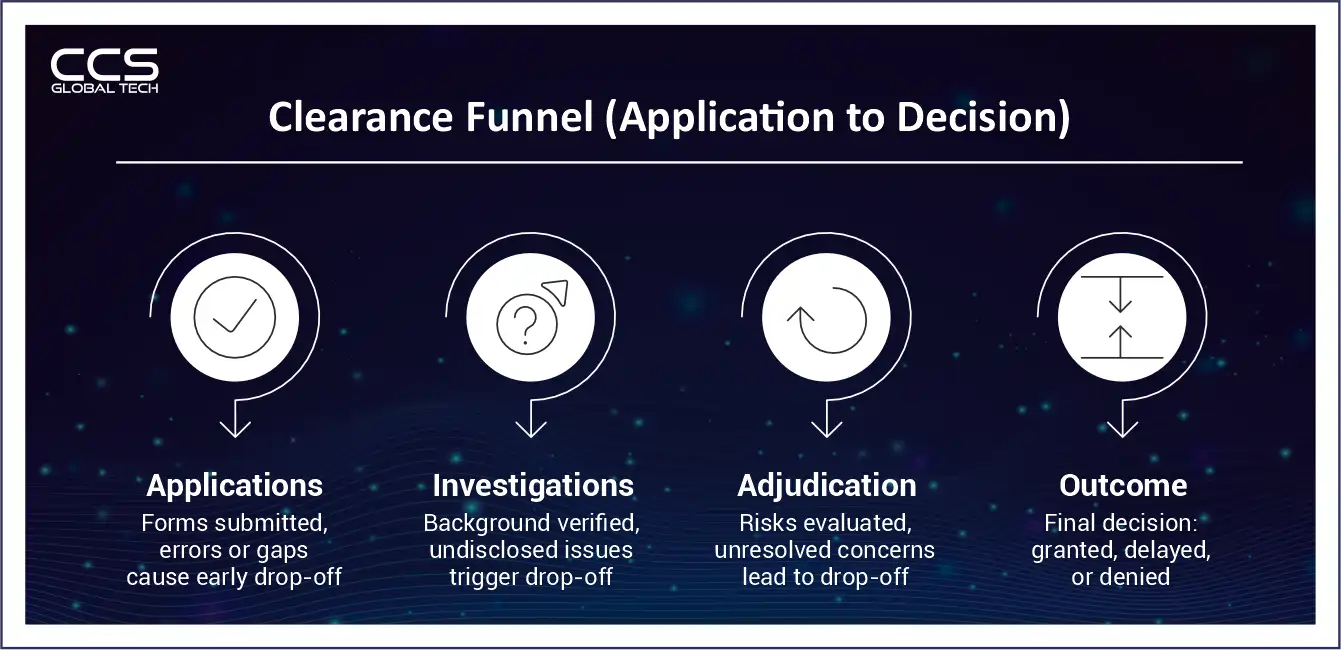
The Defense Counterintelligence and Security Agency (DCSA) denied or revoked 2,716 security clearances in fiscal year 2022 figures that reflect only formally adjudicated denials, not cases that stalled or were withdrawn during the process.
The Most Common Reasons for Security Clearance Denial
1. Financial Considerations (Guideline F)
2. Personal Conduct (Guideline E)
3. Drug Involvement (Guideline H)
4. Foreign Influence (Guideline B)
5. Criminal Conduct (Guideline J)
6. Psychological Conditions (Guideline I)

What Happens After a Denial: The Formal Process
Step 1: Statement of Reasons (SOR)
Step 2: Written Rebuttal - 20-Day Deadline
Step 3: File of Relevant Materials (FORM)
Step 4: Administrative Hearing or Written Appeal
For military personnel and federal civilian employees (as opposed to contractors), the appeal route runs through the Personnel Security Appeals Board (PSAB) at their respective agency, with DOHA available for further appeal in some cases.
Step 5: DOHA Appeal Board
Step 6: Reapplication Timeline
The Real-World Impact of a Denial
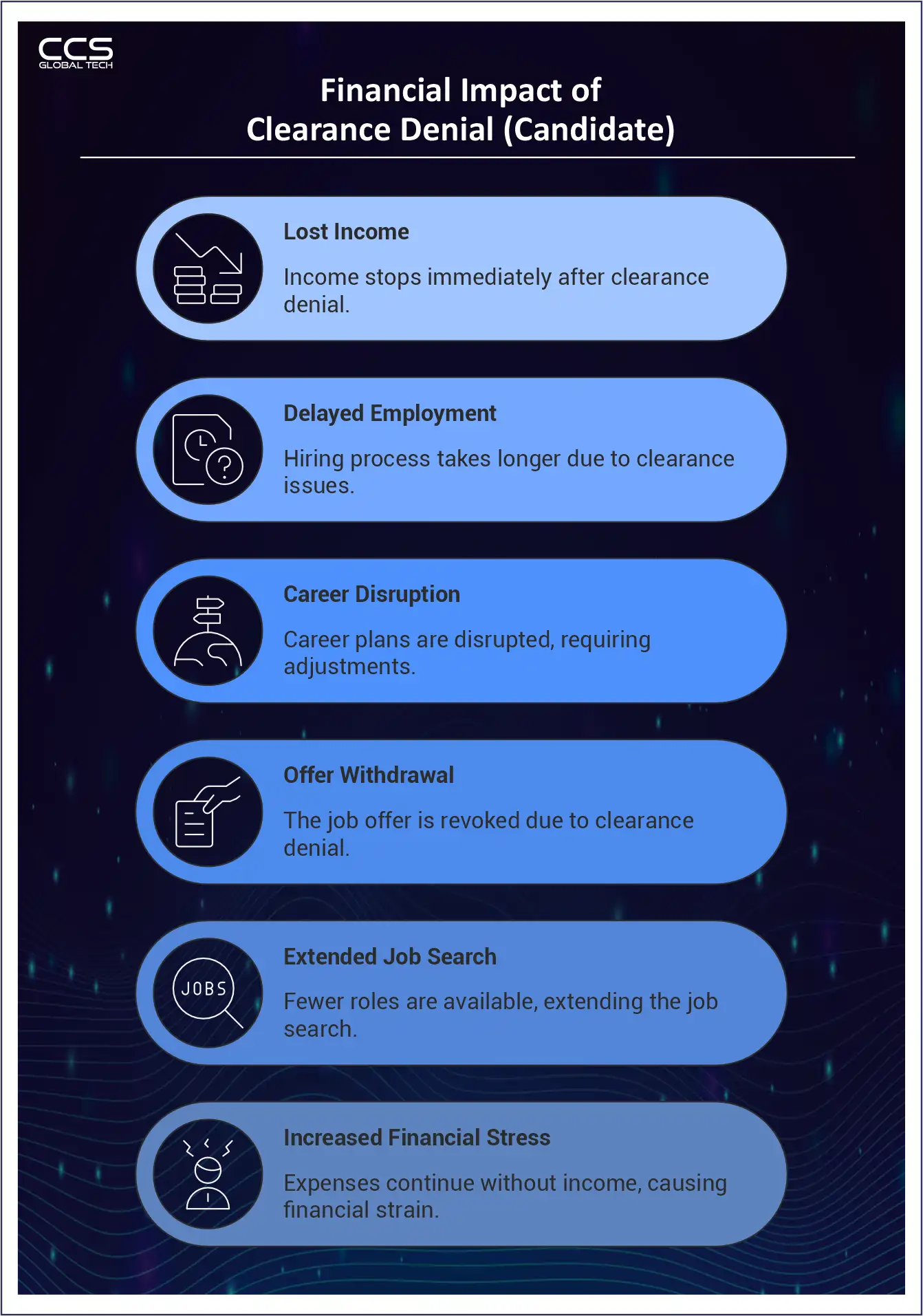
For Candidates
For Federal Contractors and Employers
What Mitigates a Denial And What Doesn't?
- Evidence of resolved or actively managed financial obligations (payment plans, reduced balances, creditor correspondence).
- Full and voluntary disclosure of all relevant information on the SF-86, including unflattering details, with written context provided.
- Demonstrated time elapsed since the conduct in question, with no recurrence.
- Documented rehabilitation for substance use or criminal conduct.
- Consistent, cooperative behavior throughout the investigative process.
- Denying issues that the investigation has already surfaced.
- Omitting information and hoping it won’t be found.
- Submitting an SOR rebuttal without supporting documentation.
- Assuming that state legalization of cannabis overrides federal clearance standards.
- Waiting passively without engaging the formal appeal process.
Steps to Take Before You Apply Or Before You Hire
For clearance candidates
- Pull and review your full credit report well before submitting the SF-86. Address outstanding balances, even partially. Document every step.
- Disclose everything on the SF-86, including items you believe are minor. Omissions are consistently more damaging than the underlying issues themselves.
- If you have foreign contacts, foreign financial interests, or any history of drug use, prepare written context in advance. Adjudicators respond to proactive transparency.
- If your background includes a complex issue prior criminal conduct, significant financial history, or foreign ties consult a security clearance attorney before submitting your application.
For federal contractors and cleared workforce managers
- Integrate clearance readiness screening into your pre-hire process. Identifying potential adjudicative concerns before sponsorship avoids costly delays.
- Build and maintain a bench of pre-vetted, already-cleared talent. A single denial should not create a contract performance crisis.
- Understand your sponsorship obligations under DoD Directive 5220.6. Clearance sponsorship carries compliance responsibilities beyond simply initiating the investigation.
- Work with cleared workforce specialists who know how to manage pipeline risk, processing timelines, and adjudication outcomes before they become operational problems.

How CCS Global Tech Supports Cleared Hiring at Every Stage?
FAQs
Q1. What happens immediately after a security clearance is denied?
A. The job offer tied to the clearance is withdrawn, and the applicant receives a Statement of Reasons outlining the issues.
Q2. Can you appeal a security clearance denial?
A. Yes. You can submit a written response to the SOR and request a hearing to present mitigating evidence.
Q3. How long do you have to respond to a Statement of Reasons (SOR)?
A. You typically have 30 days to submit a written response with explanations and supporting documents.
Q4. Does a clearance denial permanently affect your career?
A. No. You can reapply in the future after addressing the issues that led to the denial.
Q5. Can you apply for other jobs after a clearance denial?
A. Yes. You can pursue roles that do not require a clearance or reapply later once issues are resolved.
Q6. What are the most common reasons for clearance denial?
A. Financial issues, foreign influence, criminal conduct, personal conduct, and drug involvement are the primary causes.
Q7. What happens if you do not respond to an SOR?
A. Failure to respond results in automatic denial or revocation without further review.
Q8. Can you get a clearance after being denied once?
A. Yes. Many applicants succeed after demonstrating mitigation, stability, and full disclosure in future applications.
Q9. How can you improve your chances after a denial?
A. Resolve financial issues, maintain consistent records, provide documentation, and show behavioral change over time.
Q10. Does a denial stay on your record for future applications?
A. Yes. Previous findings are reviewed, especially if they involve honesty or personal conduct concerns.