


Table of Contents
What BLUF Actually Means?
Traditional Resume | BLUF Resume |
Builds slowly through career history | Leads with your strongest value |
Makes recruiters search for fit | Shows role alignment immediately |
Starts with background details | Starts with skills, impact, and results |
Lists responsibilities | Highlights measurable achievements |
Answers “What have you done?” | Answers “Why should we interview you?” |
Why BLUF Resume Format Wins in a Civilian Hiring Process?
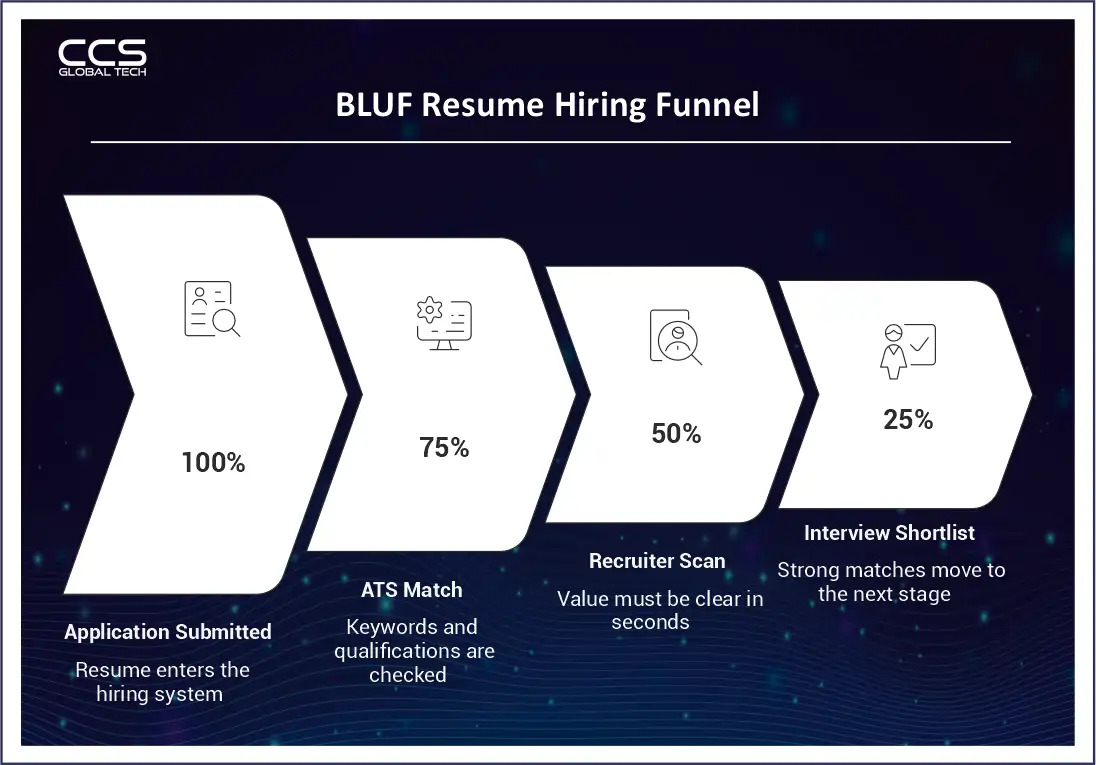
Building Your Resume's BLUF
Your summary is your bottom line
Bullets should lead with the result, not the task

Put your clearance and credentials where they'll actually be seen
BLUF applies to your cover letter too
If you’re still writing a cover letter that starts off with “I am writing to express my interest,” you’re burying the bottom line once more, only this time in a different kind of letter. Start your letter as you start every piece of writing: the position, why you’re the perfect candidate, and what makes you most qualified, all in one sentence.
BLUF applies to your cover letter too

Common Mistakes That Undo the BLUF Instinct
Starting with education instead of impact
Writing bullets as duty descriptions instead of outcomes
Explaining before stating
Considering that the summary is an afterthought
Letting rank and jargon carry the weight instead of the outcome
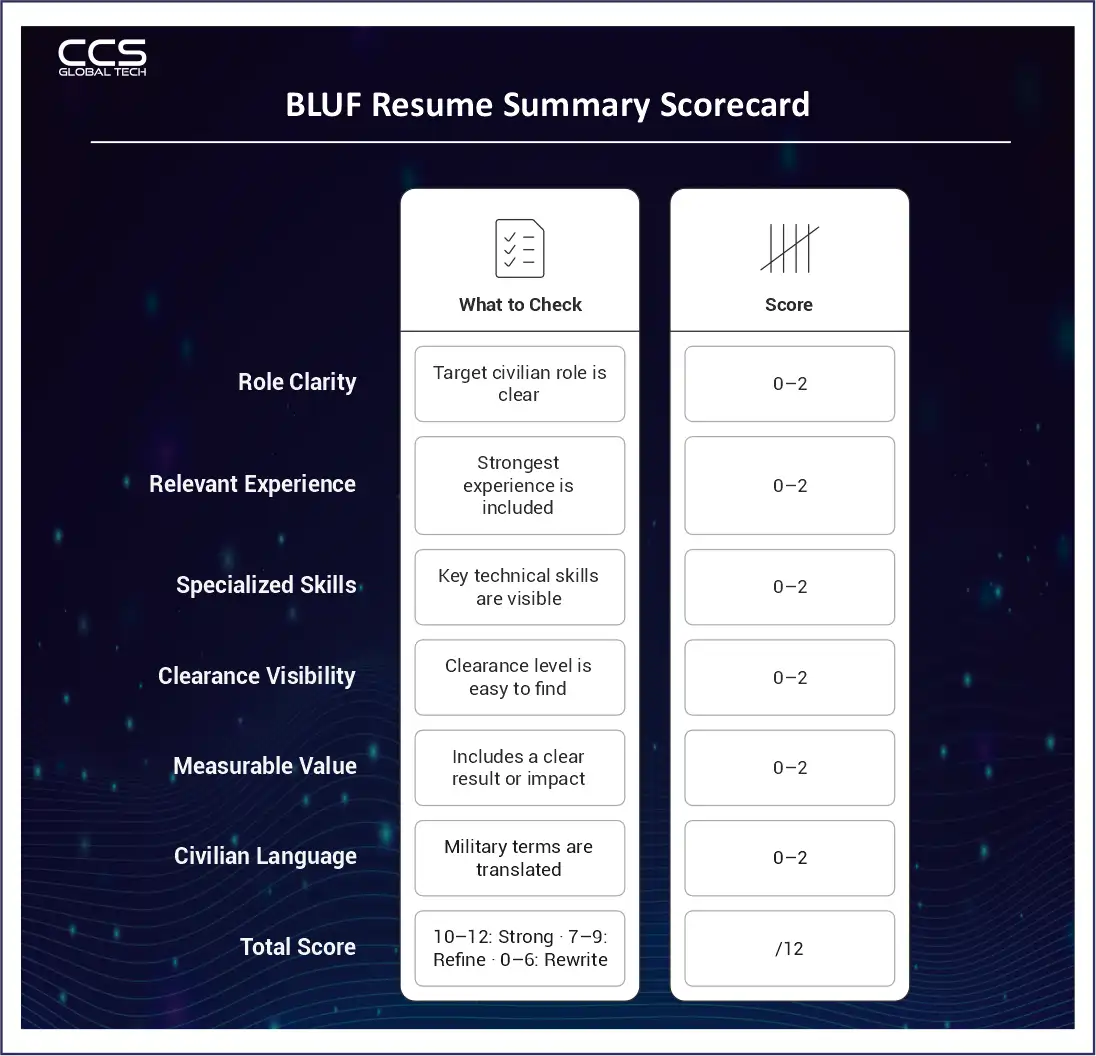
The Practical Checklist
- Rewrite your summary as a genuine bottom line: role, clearance status if applicable, one quantified achievement, in two to three lines.
- Each and every bullet needs an outcome that is quantifiable. Where it doesn’t, number it or delete it.
- Make sure that your clearance level and certifications required by the job get put in your summary or in the line following the summary.
- Delete all instances of “responsible for” and “duties included” and write in actual results instead.
- Rearrange your skills in such a way that the three or four most relevant skills go first.
- Use the answer-first rule not only in your resume but also in the opening sentence of your cover letter.
Conclusion
FAQs
Q1. What does BLUF mean in a civilian resume?
A. BLUF means putting your strongest and most relevant qualifications first. The opening lines should quickly explain the role you fit, the experience you bring, and the value you offer.
Q2. Where should the BLUF appear on a veteran resume?
A. Place it at the top of the resume in the professional headline and summary. Recruiters should understand your civilian career fit before reviewing your work history.
Q3. What should a BLUF resume summary include?
A. Include your target role, years of relevant experience, specialized skills, clearance status when relevant, and one measurable achievement.
Q4. How long should a BLUF resume summary be?
A. Keep it to three or four focused lines. Each line should add useful information rather than repeat general traits such as hardworking, dedicated, or dependable.
Q5. Should veterans include their military rank in the BLUF summary?
A. Include rank only when it adds meaningful context. Civilian employers usually care more about leadership scope, technical expertise, team size, and measurable results.
Q6. How should military job titles be presented on a civilian resume?
A. Pair the military title with a civilian equivalent. For example, translate a logistics role into supply chain operations, inventory management, or program coordination.
Q7. Should security clearance information appear near the top?
A. Yes, when the position requires or values a clearance. State the clearance level clearly without adding sensitive or unnecessary details.
Q8. How do veterans turn military duties into BLUF achievements?
A. Use the formula action + scale + result. Replace duty statements with outcomes that show the size, difficulty, and impact of your work.
Q9. What numbers should veterans include in resume achievements?
A. Use team size, budget, asset value, locations supported, time saved, error reduction, readiness levels, project volume, or performance improvements.
Q10. Is a chronological resume still compatible with BLUF?
A. Yes. Keep your work history in reverse chronological order, but lead each section and bullet with the most relevant result instead of background details.
