
Key Market Realities for 2026
- Federal agencies → Improved ability to attract Gen Z and technical talent into civil service.
- Their critical challenge: Budgetary pressure to maintain headcount with increased labor costs.
- Federal Contractors → Opportunity to renegotiate labor categories and modernize technical delivery.
- Their critical challenge: Significant risk of “poaching” from the government; margin erosion on firm-fixed-price work.
- Cleared Talent → Increased leverage to demand hybrid work or higher total compensation.
- Their critical challenge: Potential for RTO (Return-to-Office) mandates to become non-negotiable for higher pay grades.
The Looming Talent Acquisition Crisis
Data-Driven Insights on the Federal Workforce
| Metric | 2024 Data Point |
|---|---|
|
Federal Employee Turnover Rate |
Approximately 6.1% for permanent employees in 2023, with variations across agencies and job series. |
|
Average Federal Salary Increase |
5.2% in 2024 for federal employees, with a base pay increase of 4.7% and locality pay averaging 0.5%. |
|
TS/SCI Clearance Backlog |
While exact public numbers fluctuate, average processing times for Top Secret clearances can exceed 12 months. |
|
Cleared Job Postings Growth |
Growth in demand for cleared professionals continues to outpace supply, especially for specialized roles in cybersecurity and IT. |
Heightened Competition for Cleared Expertise
- Intensified Bidding Wars: With federal salaries increasing, contractors must re-evaluate their compensation packages to remain competitive. This often leads to higher operational costs and thinner profit margins, especially for fixed-price contracts.
- Prolonged Security Clearance Timelines: The persistent issue of lengthy TS/SCI processing times (often 12-18 months for initial grants) creates significant delays in project staffing. Even with interim clearances, the inability to immediately deploy fully cleared personnel can impact project timelines and client satisfaction. Clearance reciprocity, while intended to streamline the process, still presents complexities and inconsistencies across agencies.
- Narrow Cleared Talent Pools: The highly specialized nature of many cleared roles, particularly in cybersecurity, intelligence, and advanced IT, means that the available talent pool is inherently small. Contractors must develop innovative strategies to identify, engage, and onboard these individuals before competitors.
- Key Personnel Vulnerability: Many federal contracts stipulate specific key personnel requirements, making their retention paramount. A federal pay raise can incentivize these individuals to leave for higher-paying government positions or other contractors, triggering complex modification negotiations and lengthy replacement approval processes that can jeopardize contract performance and future awards.
- Impact on Small Business Goals: Small businesses, particularly those operating under socioeconomic set-asides, face an amplified challenge. They must meet subcontracting requirements and compete for the same scarce cleared talent as larger primes, often with fewer resources. Strategic teaming agreements and innovative talent acquisition models become even more crucial.

Strategic Solutions for Talent Acquisition and Retention
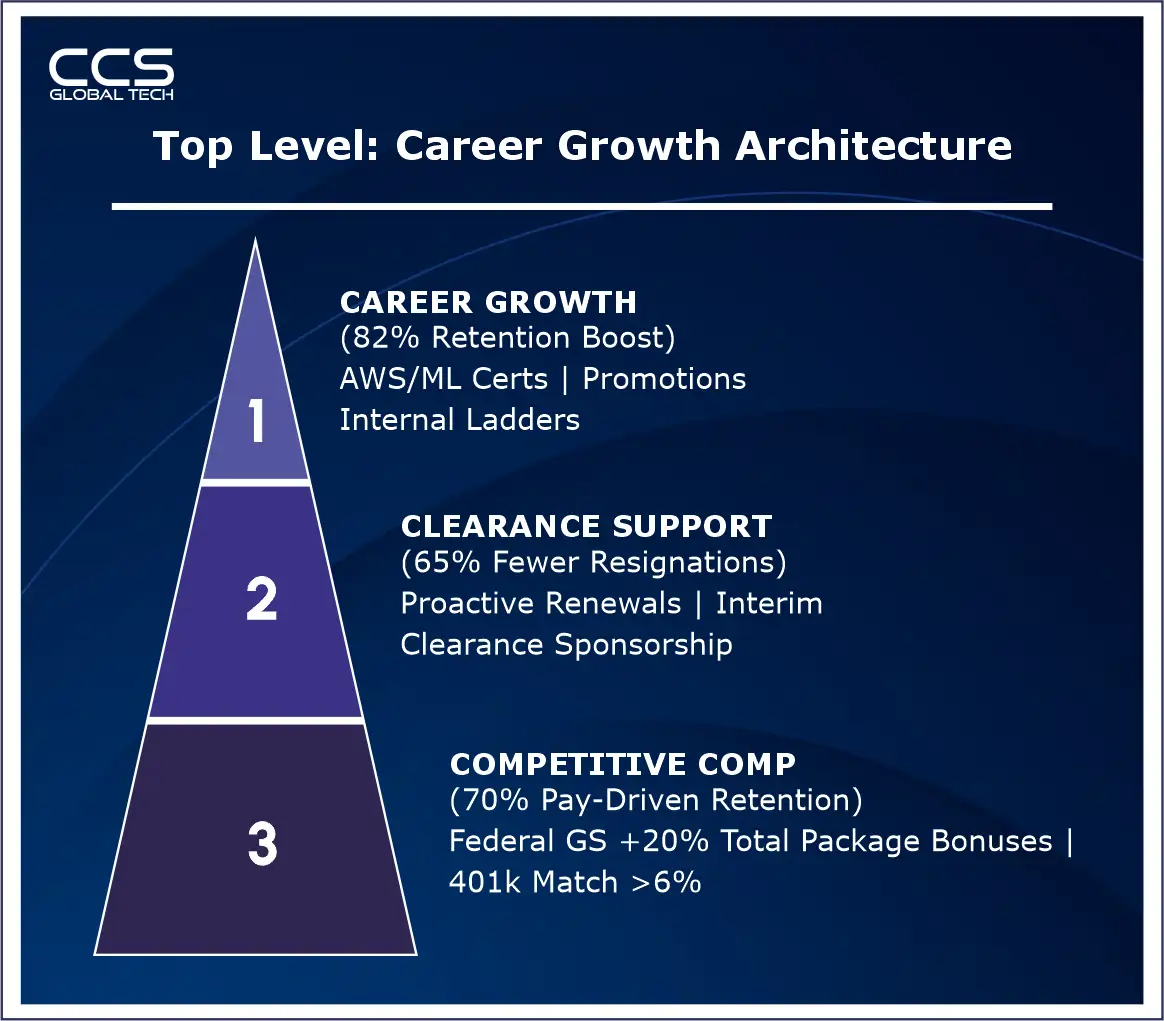
- Re-evaluate Compensation and Benefits: Conduct thorough market analyses to ensure compensation packages for cleared professionals are competitive not only with other contractors but also with federal government salaries. This extends beyond base pay to include robust benefits, performance bonuses, and professional development opportunities.
- Streamline Internal Clearance Processes: While contractors cannot directly influence government processing times, they can optimize their internal processes for managing clearances, including proactive renewal tracking and efficient submission of necessary documentation. Explore opportunities to leverage interim clearances where appropriate and clearly communicate timelines to both candidates and agencies.
- Invest in Talent Development and Upskilling: Develop internal programs to train and upskill existing employees, potentially sponsoring clearances for promising non-cleared talent. This builds a pipeline of future cleared professionals and fosters loyalty.
- Embrace Flexible Work Models: While RTO mandates are a factor, where possible and permissible by contract, offering hybrid or remote work options can significantly broaden the talent pool and attract individuals prioritizing work-life balance.
- Strengthen Recruitment Partnerships: Collaborate with specialized federal staffing firms that have deep networks of cleared professionals and expertise in navigating the unique challenges of this market.
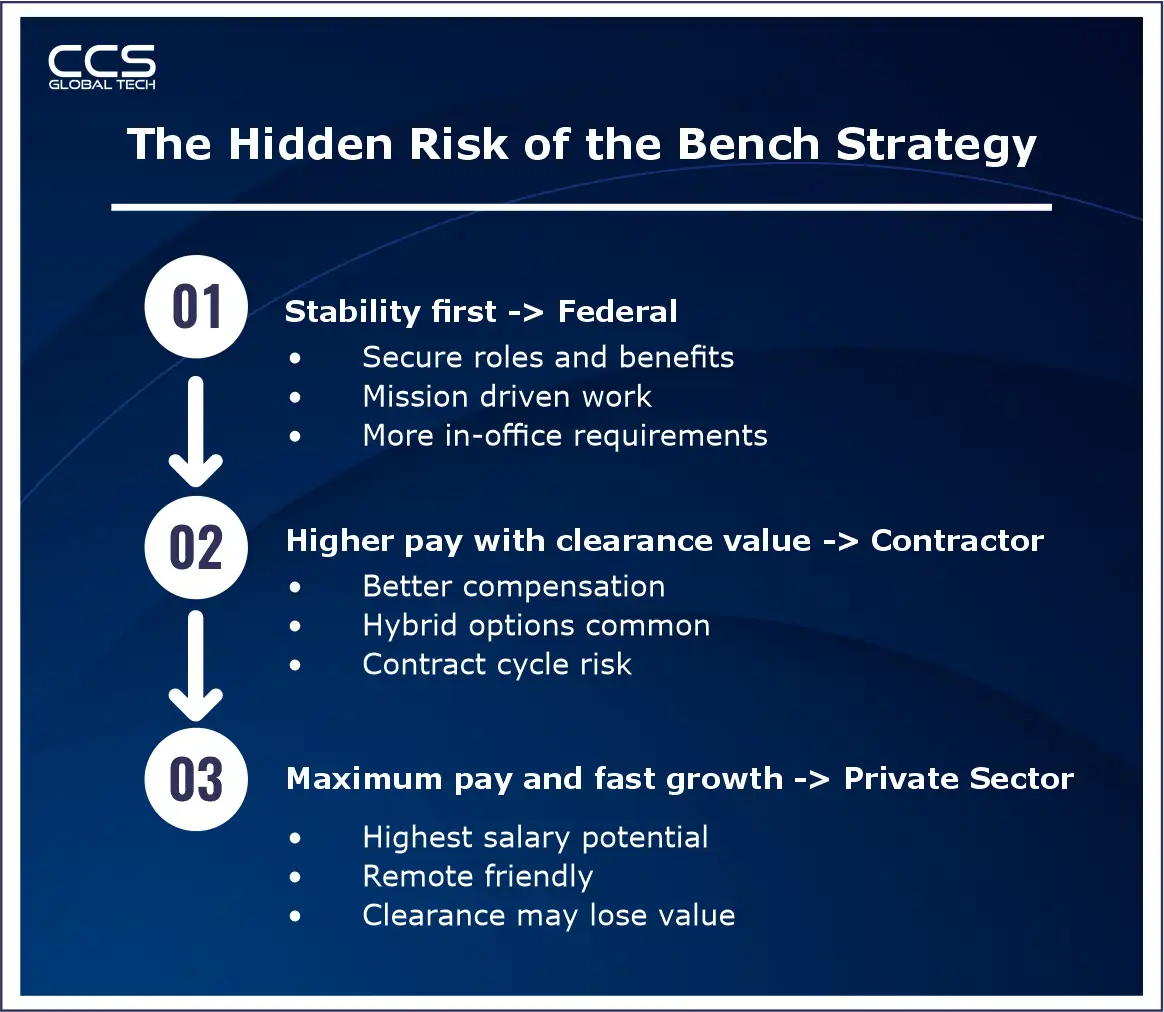
- Proactive Key Personnel Management: Implement robust succession planning for key personnel. Maintain a “bench” of pre-vetted, cleared candidates who can quickly step into critical roles if needed, minimizing disruption during replacement approval processes.
- Strategic Proposal Positioning: In proposals, demonstrate a clear understanding of the talent market. Present a credible and well-articulated staffing plan that addresses the scarcity of cleared talent. Highlight successful retention strategies, robust pipelines, and a commitment to employee development. This strengthens the technical evaluation and increases win rates by assuring source selection criteria are met.
A Hypothetical Case Study: Navigating a Post-Raise Environment
- Compensation Adjustment: They immediately analyzed the new federal salary benchmarks and adjusted their offer ranges for cleared roles by 7-10% to remain competitive.
- Expedited Clearance Management: They leveraged their internal security team to fast-track paperwork for candidates with existing clearances, ensuring quick transfers and reducing administrative delays. For one promising candidate with an expired clearance, they proactively initiated the re-investigation process, communicating transparently with the agency about the expected timeline and proposing an interim solution with a junior, cleared resource.
- Strategic Teaming: Recognizing the urgency, they engaged a specialized staffing partner (like CCS Global Tech) to tap into a broader, pre-vetted pool of TS/SCI professionals. This partnership allowed them to quickly identify two qualified candidates who were already cleared and actively seeking new opportunities.
- Internal Development: Simultaneously, they identified two internal, non-cleared engineers with strong potential and initiated the sponsorship for their Top Secret clearances, investing in their long-term talent pipeline.

Architecting a High-Performance 2026 Talent Model
1. Execute a Comprehensive Compensation Audit (Q4 2024 - Q1 2025)
- Locality Pay Sensitivity: Analyze how the 2026 locality pay adjustments impact your remote or hybrid workforce. If a federal agency in a high-cost hub offers a 4.7% raise, your “out-of-market” talent may suddenly find public service more lucrative.
- Fringe Benefit Parity: Review your indirect cost pools. With the 2026 contractor compensation cap estimated at $695,000, ensure your executive and high-level technical pay structures are optimized to remain allowable under DCAA audits while staying competitive.
- Action: Cross-reference your current payroll against OPM 2026 pay projections and niche salary surveys (e.g., ClearanceJobs, Dice) to identify “flight risk” roles.
2. Modernize Recruitment for Passive Cleared Talent (Q1 2025 - Ongoing)
By 2026, 90% of organizations will face a technical skills shortage. Traditional job boards are insufficient for TS/SCI roles, which now take 12-18+ months to fully process.
- “Consult-to-Clear” Pipelines: Engage high-potential candidates with adjacent skills and initiate their clearance process early. This “warm” pipeline ensures you have a bench of talent ready to bill the moment an interim or final clearance is granted
- Leverage Veteran Networks: Transitioning service members remain the most reliable source of pre-cleared talent. Strengthen ties with military transition offices to capture talent before they enter the open market.
- Action: Transition your recruitment team from “order takers” to “talent scouts”, focusing 70% of effort on passive engagement with cleared professionals not currently looking for work.
3. Digitalize Clearance and Compliance Tracking (Ongoing)
With the full transition to Trusted Workforce 2.0 (TW 2.0) in 2026, the federal government is moving toward continuous vetting and accelerated reciprocity.
- Real-time Monitoring: Implement digital FSO (Facility Security Officer) tools to track “real-time trigger alerts” from continuous vetting. This prevents surprise “no-access” orders that can halt contract billing.
- Reciprocity Management: Use automated tracking to manage clearance transfers between agencies (e.g., DoD to IC), reducing the “bench time” where a cleared employee is on your overhead but cannot yet work on a new site.
- Action: Audit your current clearance tracking method. If you are still using spreadsheets, migrate to an encrypted, auditable compliance platform to meet 2026 CMMC and NIST requirements.
4. Formalize Key Personnel Succession Plans (Q2 2025)
Federal contracts often include “Key Personnel” clauses that penalize contractors for vacancies. A 2026 raise increases the risk of these individuals being poached by agencies or larger primes.
- Internal Upskilling: Identify “High-Potential” (HiPo) employees with lower-level clearances (Secret) and sponsor their upgrade to TS/SCI. This is cheaper and faster than external hiring for specialized roles.
- Shadowing Protocols: Where contract budgets allow, include junior staff in “shadowing” roles to ensure mission knowledge isn’t lost if a Key Person departs.
- Action: Map every “Key Personnel” slot to at least two internal “Ready-Now” or “Ready-in-6-Months” successors.
5. Calibrate Proposal Staffing Language (Ongoing)
In 2026, technical evaluators are increasingly skeptical of “boilerplate” staffing plans. They want to see proof of a resident workforce, not just a promise to hire.
- Address Scarcity Directly: Use your proposal to explain how your firm mitigates the TS/SCI shortage. Mention your specific staffing partnerships and internal clearance sponsorship programs.
- Credible Retention Data: Include verified retention statistics and explain how your 2026 compensation model accounts for federal pay parity.
- Action: Update your “Factor 3: Staffing & Management” templates to include specific 2026 market data and a “Clearance Risk Mitigation” section.
Deploy Strategic Staffing Partnerships (Immediately)
The speed of the 2026 market favors firms that can scale instantly. Specialized firms like CCS Global Tech can reduce time-to-hire by up to 30-40% through established cleared networks.
- Mixed Staffing Models: Balance your core permanent team with “surge” contract talent to handle the “feast-or-famine” cycles of federal task orders.
- Niche Expertise: Use staffing partners to find the “purple squirrels” – professionals with both a TS/SCI and specialized certifications in AI, Zero-Trust, or Cloud Architecture.
- Action: Establish a Master Service Agreement (MSA) with a federal staffing expert now so that you are “award-ready” when the 2026 RFP cycle peaks.
You Mental Checklist should answer these:
- How will your current compensation model withstand increased federal salary competition and ensure key personnel retention on existing contracts?
- What proactive measures are you taking to mitigate the impact of prolonged security clearance processing times on your ability to staff future contract wins?
- Is your proposal strategy adequately addressing the acute scarcity of cleared talent, and does it credibly demonstrate your ability to meet stringent staffing requirements?
Partnering for Federal Talent Success
The federal market is dynamic, and the upcoming pay raise will undoubtedly reshape the competitive landscape for talent. Contractors need a partner who understands these complexities and can provide agile, effective staffing solutions. CCS Global Tech specializes in connecting federal agencies and contractors with the highly skilled, cleared professionals they need to achieve mission success, navigating challenges like talent scarcity and lengthy clearance processes with expertise.
FAQs
Q1: How will the 2026 federal pay raise impact contractor hiring competition
A: Higher federal salaries raise baseline compensation expectations, forcing contractors to adjust offers or risk losing cleared candidates to government roles.
Q2: Will federal agencies gain an advantage in recruiting cleared technical talent
A: Agencies gain short-term leverage, but budget limits and headcount caps still restrict how many roles they can fill.
Q3: How does the pay raise affect retention risk for federal contractors
A: Contractors face higher attrition risk as cleared staff receive stronger public sector offers with stability and pension benefits.
Q4: Can contractors renegotiate labor rates after the federal pay increase
A: Yes. Many firms pursue contract modifications or category realignments to protect margins and retain key staff.
Q5: Does the pay raise increase return-to-office pressure on cleared professionals
A: Yes. Higher pay often comes with stricter onsite requirements, reducing flexibility for senior clearance holders.
Q6: Which cleared roles are most affected by the 2026 pay adjustment
A: Cybersecurity, cloud engineering, intelligence analytics, and program management roles see the highest impact.
Q7: How should contractors protect margins on firm-fixed-price contracts
A: Firms must rebalance staffing mixes, accelerate automation, and renegotiate high-risk labor categories early.
Q8: Will cleared professionals gain more negotiation power in 2026
A: Yes. Strong demand plus federal pay adjustments increase leverage for hybrid work and total compensation packages.
Q9: How does the pay raise change recruiting strategies for cleared staffing teams
A: Teams must shift toward passive sourcing, early pipeline building, and faster clearance onboarding cycles.
Q10: What long-term risks does the pay raise create for the federal labor market
A: Sustained pay gaps may distort contractor pricing, reduce competition, and increase project delivery risk across agencies.