

Why Veterans Leave Federal Contractor Roles?
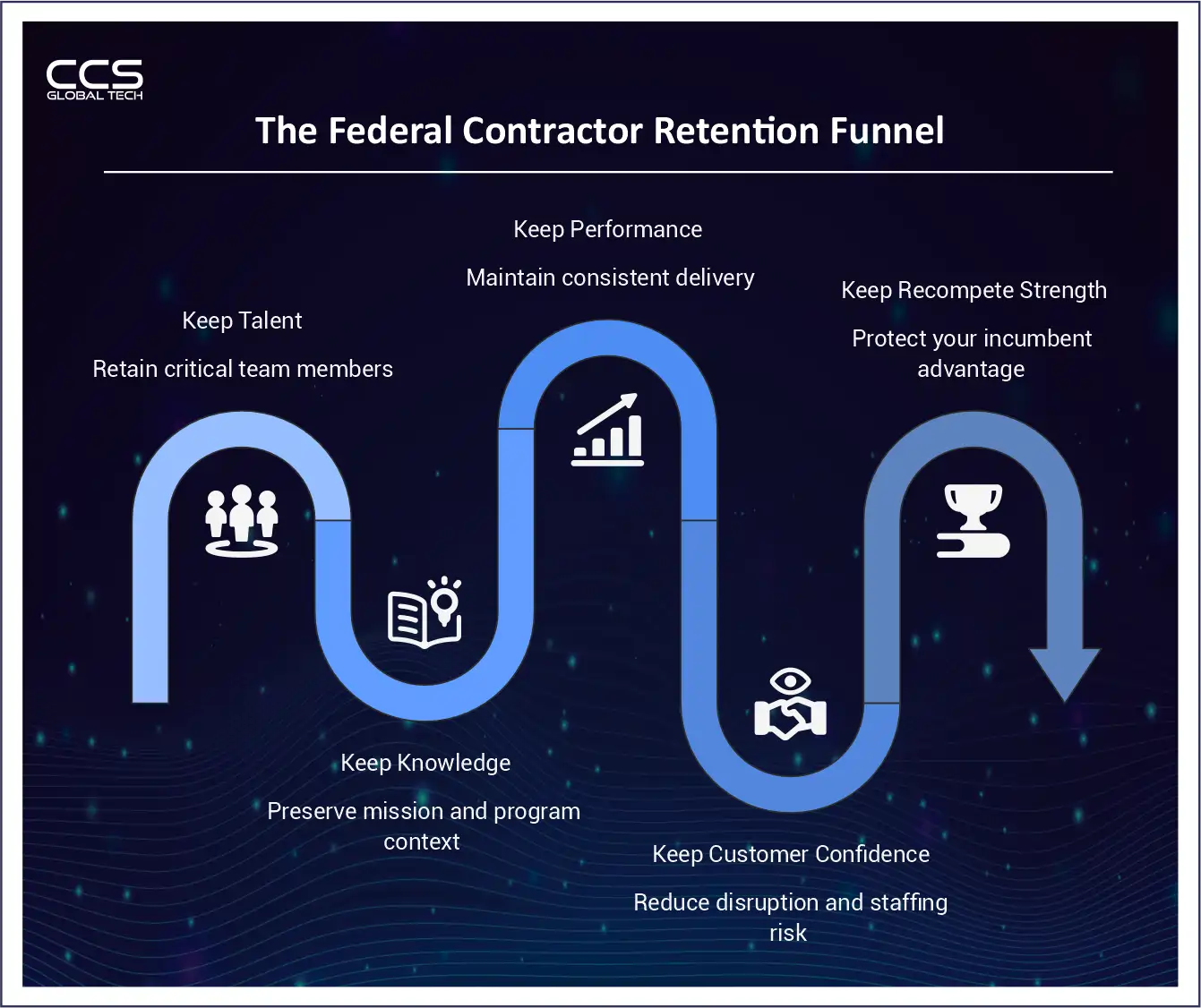
How Veteran Retention Affects Your Recompete and Past Performance?
9 Veteran Employee Retention Strategies for Federal Contractors
1. Match the Role to Demonstrated Scope, Not the Clearance
2. Build the Career Path Before the Start Date
3. Treat Contract Transitions as a Retention Event
4. Protect Clearance Continuity
5. Assign a Veteran Mentor in Week One
6. Train the Managers, Not Just the Veterans
7. Use Your VEVRAA Outreach Partners for Retention
8. Run Stay Interviews at 60 Days, 6 Months, and 12 Months
9. Build a Pipeline Through SkillBridge

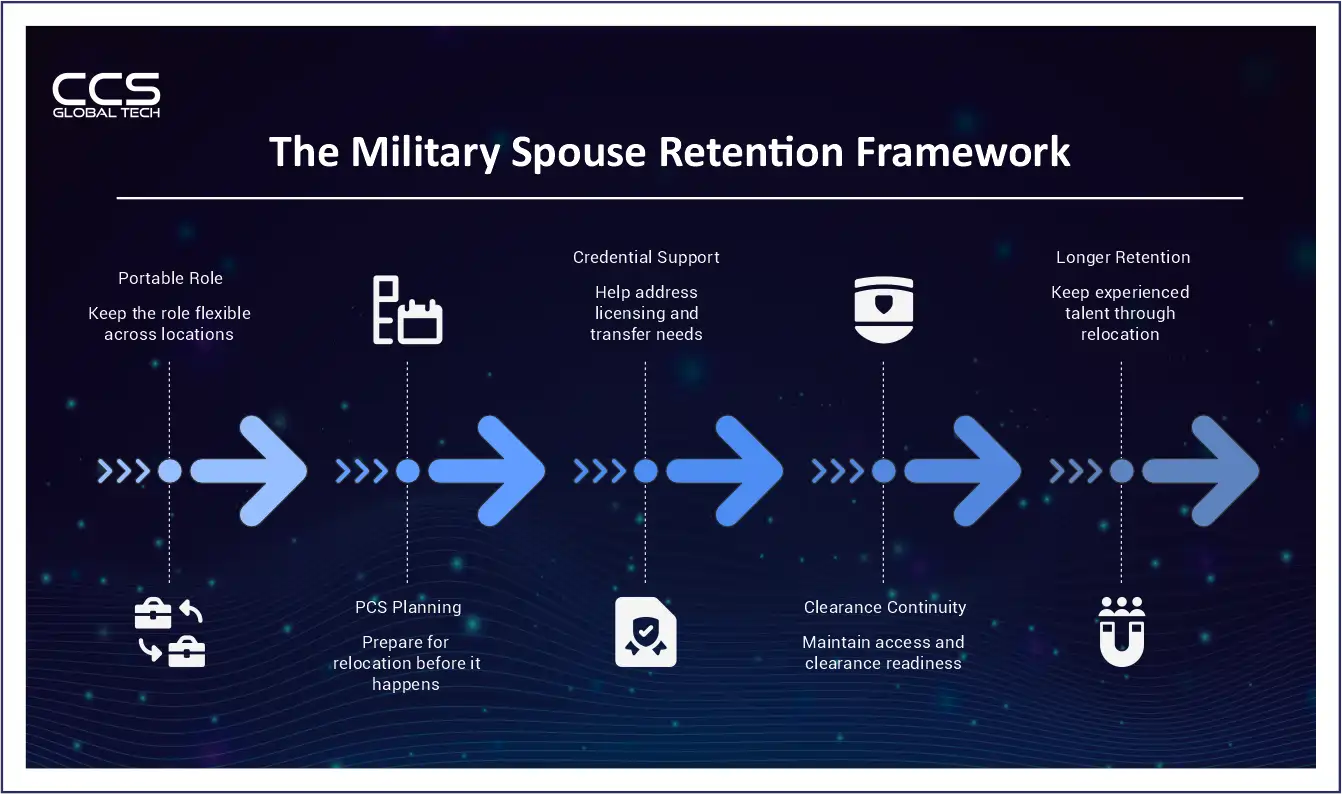
Military Spouse Retention Strategies for Federal Contractors
The First 90 Days of Veteran Retention
Timeframe | What should happen |
Before day one | Role scope confirmed against actual military responsibility; mentor assigned; manager briefed |
Week 1 | Mentor introduction; clear explanation of how work gets assigned and reviewed |
Day 30 | Written career path conversation; clearance timeline explained |
Day 60 | Formal stay interview; check whether assigned work matches capability |
Day 90 | Scope adjustment if the role runs below capability; confirm next-step timing |
Veteran Retention Metrics Federal Contractors Should Track

Veteran Retention Mistakes That Cost Federal Contractors
The Final Say
Frequently Asked Questions
Q1- Why do veterans leave their first civilian job?
A- Most cite lack of advancement and work that does not use their military skills. Research links underemployment directly to higher turnover. Analysis also shows many departures are for positive reasons such as better pay or responsibility, which points to role mismatch rather than poor adjustment.
Q2- Does VEVRAA require federal contractors to retain veterans?
A- VEVRAA requires covered contractors to take affirmative action to recruit, hire, promote, and retain protected veterans. Most compliance programs concentrate on hiring, but retention and advancement sit inside the same statutory obligation.
Q3- What is the VEVRAA hiring benchmark for 2026?
A- The national benchmark is 5.1 percent, effective July 30, 2025, down from 5.2 percent. Contractors may instead set a custom benchmark using local veteran availability and their own hiring data under OFCCP’s regulations.
Q4- Did VEVRAA end when EO 11246 was rescinded?
A- No. Executive Order 11246 covered race and gender affirmative action and was rescinded in 2025. VEVRAA is a statute passed by Congress, so its benchmark and tracking duties remain in force. Compliance evaluations resumed in July 2025.
Q5- What contract value triggers VEVRAA obligations?
A- Basic duties apply at $200,000, raised from $150,000 on October 1, 2025. A written affirmative action program is required at $200,000 plus 50 or more employees.
Q6- Is missing the veteran hiring benchmark a violation?
A- No. The benchmark is an assessment tool. Findings come from failing to assess outreach, document the analysis, and act on it. A documented gap with a plan is defensible.
Q7- How does veteran retention affect contract recompetes?
A- Past performance narratives depend on team continuity, key personnel commitments assume those people stay, and incumbent advantage rests on a team that knows the mission. Heavy turnover in the year before a recompete erodes all three.
Q8- How do you retain cleared veterans specifically?
A- Match the role to demonstrated scope rather than the clearance, protect clearance continuity between assignments, start redeployment conversations 90 days before contract end, and provide a written advancement path. Cleared professionals have the most outside options.
Q9- What is DoD SkillBridge and how does it help retention?
A- SkillBridge lets service members spend up to their final 180 days in a civilian work placement while the military continues paying them. Both sides get a trial period, which removes the expectation gap driving many first-year departures.
Q10- How should contractors support military spouse employees?
A- Make roles portable across a PCS where contract security terms allow, plan for announced moves instead of reacting, join the Military Spouse Employment Partnership, and check credential portability across states for licensed roles.