
What Public Trust Clearance Actually Means?
- Federal IT programs
- Data analytics and reporting systems
- Healthcare and financial systems
- Program management and operations
Why This Process Matters More Than Candidates Expect?
Core Requirements for Public Trust Clearance
1. Financial Responsibility
- Delinquent or past-due accounts.
- Collections, charge-offs, or settlements.
- Patterns of missed or inconsistent payments.
- Sudden increases in debt without explanation.
2. Employment and Background Consistency
- Complete employment timelines with accurate dates.
- Verified education records.
- Full residential history without gaps.
Gaps in employment or residence are not unusual. Career transitions, relocations, or personal breaks happen. The issue arises when those gaps are not explained.
3. Criminal and Legal History
- Arrests, even if charges were dropped.
- Criminal charges and outcomes.
- Civil or legal proceedings where applicable.

4. Foreign Contacts and Influence
5. Personal Conduct and Integrity
Where Most Candidates Get Delayed?
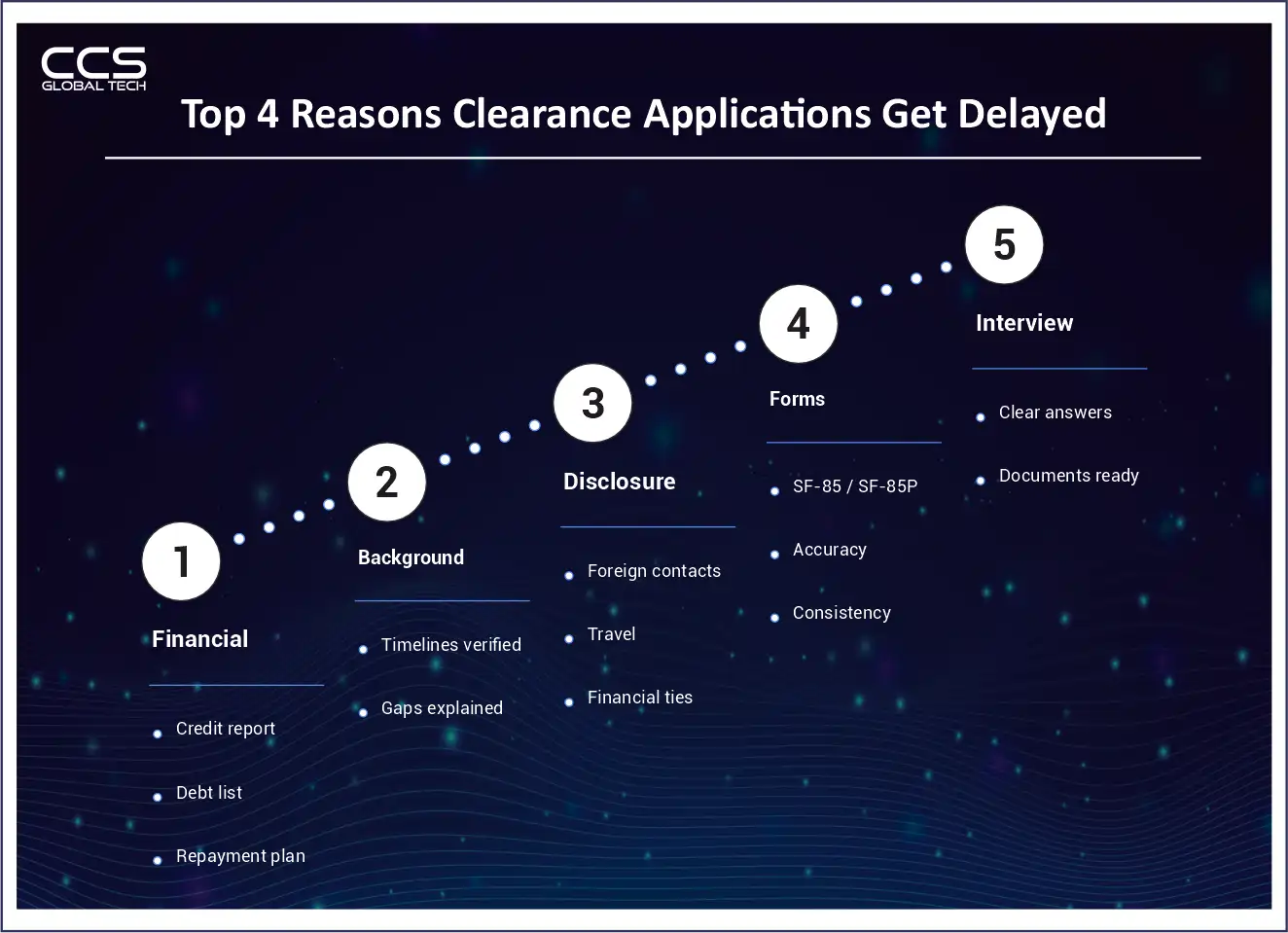
How Small Issues Escalate?
- Financial issues
- Employment gaps
- Foreign contacts
A Structured Approach to Meeting Requirements
Step 1: Build Financial Clarity
- Pull credit reports
- Identify all outstanding obligations
- Create repayment plans
Step 2: Audit Your Background
- Review employment timelines
- Document all gaps
- Gather legal and financial records
Step 3: Prepare for Disclosure
- List all foreign contacts
- Document travel history
- Be ready to explain context
Step 4: Validate Your Forms
- Complete SF-85 or SF-85P carefully
- Review for accuracy
- Cross-check with supporting documents
Step 5: Prepare for the Interview
- Why was this not disclosed earlier
- What steps have you taken to resolve this issue
- Can you provide supporting documentation
Real-World Scenario: What Preparation Changes
- Had minor financial issues
- Did not prepare documentation
- Provided incomplete disclosures
- Had similar financial issues
- Provided repayment plan
- Documented all disclosures clearly

The Business Impact of Getting This Right
- Federal contracts
- Long-term program roles
- Higher compensation opportunities
Why Preparation Is the Differentiator?
- Control over their financial and personal history.
- Consistency across all disclosures.
- Transparency in communication.
How CCS Global Tech Federal Services Supports This Process?
Your Next Step
- Small gaps create delays.
- Unclear disclosures create risk.
- Structured preparation creates momentum.
FAQs
Q1: How far back does a Public Trust background check go?
A: Most investigations review 5 to 7 years of history based on role risk level. Higher-risk roles may require deeper checks across financial, employment, and personal records.
Q2: Can I get Public Trust clearance with bad credit or debt?
A: Yes, debt is not an automatic disqualifier. Investigators look for repayment plans, consistent payments, and clear documentation showing financial control.
Q3: Do employment gaps affect Public Trust clearance approval?
A: Gaps are acceptable if clearly explained. Unexplained or inconsistent gaps often lead to follow-ups and delays.
Q4: How strict is the SF-85 or SF-85P review process?
A: The review is detailed and cross-checked with multiple sources. Even small inconsistencies can trigger additional scrutiny.
Q5: What happens if I forget to disclose something on my application?
A: Non-disclosure creates more risk than the issue itself. It should be corrected immediately with a clear explanation and supporting details.
Q6: How long does the Public Trust clearance process take?
A: Timelines vary from a few weeks to several months depending on complexity, accuracy of the application, and verification requirements.
Q7: Do foreign contacts automatically disqualify me?
A: No, foreign contacts are common. Full disclosure and clear context help eliminate concerns about influence or risk.
Q8: What questions do investigators typically ask?
A: They focus on financial issues, employment gaps, foreign contacts, and any inconsistencies. Supporting documentation is often requested.
Q9: Can a previously denied clearance affect my application?
A: Yes, it will be reviewed, but it does not automatically disqualify you. You must disclose it and show what has changed since then.
Q10: How can I reduce delays in the clearance process?
A: Submit accurate forms, provide complete documentation, resolve financial issues early, and prepare for investigator questions.