

How to Get Secret Clearance Step by Step: A Comprehensive Guide

How to Get Secret Clearance Step-by-Step Guide
Secret clearance plays a critical role across federal contracting, cybersecurity, defense technology, intelligence support, and government IT modernization programs. From cloud engineers and cybersecurity analysts to systems administrators and defense program specialists, thousands of professionals working on federal projects require access to classified information to perform their responsibilities effectively.
Despite how common Secret clearance has become in federal hiring, the process still creates confusion for many candidates. Questions around sponsorship, background investigations, financial reviews, foreign contacts, timelines, and eligibility standards often make the process feel more intimidating than it needs to be.
Demand for cleared professionals continues rising as agencies expand investments in cybersecurity, AI, cloud modernization, and national security infrastructure. According to the U.S. Bureau of Labor Statistics, information security analyst jobs are projected to grow 29% through 2033, significantly faster than the average for all occupations.
Government agencies and federal contractors continue competing aggressively for candidates who already hold active clearances because the investigation process itself requires time, compliance review, and significant administrative effort.
Understanding how the Secret clearance process works gives candidates a major advantage. This guide explains each stage clearly, including how sponsorship works, what investigators review, common reasons for delays or denials, timelines, and practical ways to improve clearance readiness.

What Is a Secret Clearance?
A Secret clearance allows an individual to access classified information that could cause serious damage to national security if disclosed improperly. It is one of the primary federal security clearance levels used across defense operations, military programs, intelligence support, cybersecurity environments, and federal technology systems.
Secret clearance is commonly required for professionals supporting defense contractors, military installations, cloud migration programs, federal data centers, cybersecurity operations, logistics systems, and intelligence-related infrastructure. Compared to Top Secret clearance, the investigation scope is narrower, but the review process still involves extensive vetting of personal history, finances, criminal records, and trustworthiness.
The Defense Counterintelligence and Security Agency oversees much of the federal personnel vetting process supporting national security hiring.
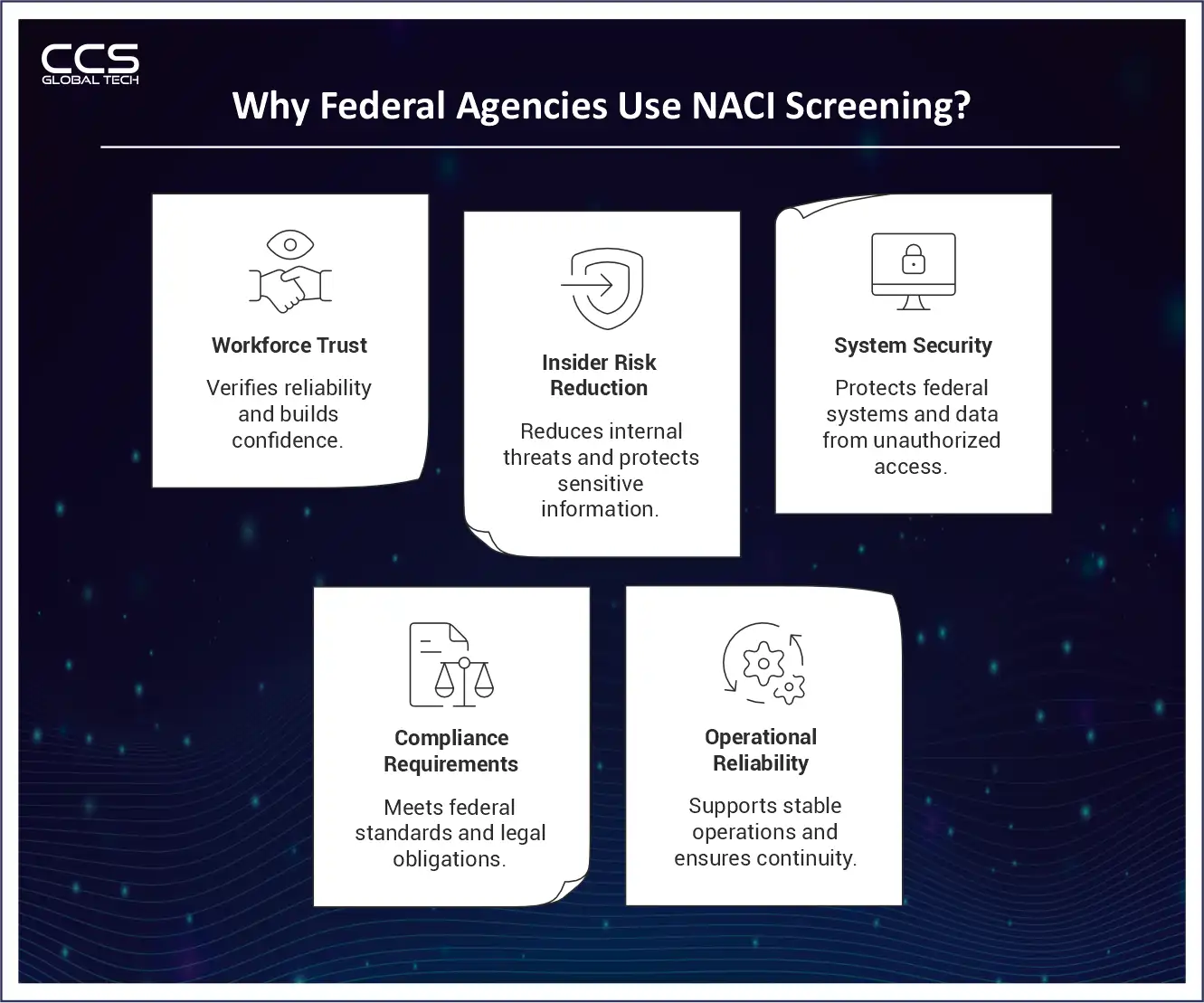
Why Federal Agencies Use NACI Screening

Steps to Get Secret Clearance easily

Step 1: Receiving Sponsorship From a Federal Employer or Contractor

One of the biggest misconceptions about Secret clearance is that individuals can apply independently. In reality, clearance sponsorship must come from a federal agency or an authorized government contractor that requires classified access for a specific role.
Most candidates begin the process after receiving a conditional offer tied to a federal contract, military support role, or classified project. Defense contractors, cybersecurity firms, aerospace organizations, intelligence support providers, and federal IT vendors commonly sponsor Secret clearances because their employees regularly handle controlled or classified government systems.
For example, a cybersecurity analyst hired to support a Department of Defense network modernization project may receive an employment offer contingent on successfully obtaining Secret clearance before accessing the environment. In these cases, the employer initiates the sponsorship request because the work itself requires clearance eligibility.

Step 2: Completing the SF-86 Questionnaire

Once sponsorship begins, candidates complete the SF-86, formally known as the Questionnaire for National Security Positions. This document becomes the foundation of the entire background investigation.
The SF-86 requires detailed disclosure of employment history, previous addresses, foreign travel, foreign contacts, education records, criminal history, financial issues, military service, drug use, and family information. Most sections cover the previous seven to ten years, although certain categories may require longer disclosure periods depending on circumstances.
This stage often feels overwhelming because of the level of detail required. Small inconsistencies between dates, addresses, or employment records can create delays later in the investigation. More importantly, investigators place enormous emphasis on honesty and completeness.
The Office of the Director of National Intelligence identifies personal conduct and incomplete disclosure as major adjudication concerns under SEAD-4 guidelines.
Candidates sometimes assume older financial issues, minor legal incidents, or past mistakes automatically disqualify them. In practice, investigators are often more concerned about omitted information than the issue itself. Transparency matters heavily throughout the clearance process.

Step 3: Fingerprinting and Background Investigation

After SF-86 submission, the formal background investigation begins. This stage includes FBI fingerprint checks, criminal history searches, identity verification, employment validation, citizenship confirmation, and financial reviews.
Investigators review information across federal, state, county, and commercial databases to confirm the applicant’s identity, reliability, and trustworthiness. Employment history is cross-checked carefully, and references may be contacted to validate behavioral consistency and professional conduct.
Identity verification has become increasingly important as digital fraud and credential falsification continue rising across hiring environments. Investigators are trained to identify inconsistencies across records, aliases, addresses, and employment history that may indicate security concerns or inaccurate disclosures.
The goal is not simply to verify technical qualifications. The broader purpose is to evaluate whether the applicant demonstrates the judgment and reliability necessary to handle sensitive government information responsibly.

Step 4: Financial Review and Security Risk Assessment

Financial history remains one of the most closely reviewed areas during Secret clearance investigations. Investigators examine unpaid debt, collections, bankruptcies, tax problems, repeated delinquencies, gambling concerns, and unexplained financial behavior.
Many applicants assume any financial problem automatically leads to denial. That is not how the process typically works. Investigators focus heavily on context, stability, repayment efforts, and overall responsibility.
According to SEAD-4 guidelines, financial considerations remain one of the most common adjudication categories reviewed during security investigations.
For example, a systems engineer supporting a defense subcontract disclosed an older medical collection account tied to a temporary financial hardship several years earlier.
The candidate provided repayment documentation, stable employment history, and evidence showing the issue had been resolved responsibly. Because the concern was disclosed honestly and supported with mitigation evidence, the clearance process continued successfully.
Financial problems become far more serious when applicants attempt to hide them, ignore them repeatedly, or demonstrate ongoing instability without corrective action.

Step 5: Interviews With References and Investigators

During the investigation process, references, coworkers, supervisors, and personal contacts may be interviewed to validate the applicant’s character, reliability, and overall trustworthiness.
Investigators are not only confirming factual information. They are evaluating patterns of behavior, professionalism, honesty, judgment, and consistency between the SF-86 and real-world interactions.
Some candidates are also contacted directly for follow-up interviews if investigators identify inconsistencies or require clarification around finances, foreign travel, criminal records, or previous disclosures.
These conversations often become important opportunities for applicants to provide additional context and demonstrate transparency. Investigators understand that life circumstances change over time. The review process focuses heavily on whether the applicant demonstrates accountability and long-term stability.

Step 6: Foreign Contact and Foreign Influence Review

Foreign travel and international relationships receive heightened attention during modern clearance investigations. Investigators evaluate foreign family members, overseas financial interests, dual citizenship concerns, foreign business relationships, and unreported travel history.
Foreign contact alone does not automatically disqualify someone from obtaining Secret clearance. Many cleared professionals have international relatives, travel history, or legitimate foreign relationships.
The concern is whether those relationships create vulnerability to coercion, foreign influence, or improper disclosure of classified information. Once again, transparency becomes critical.
Applicants who openly disclose foreign relationships and provide accurate details generally create fewer concerns than applicants who attempt to minimize or hide foreign interactions during the investigation process.

Step 7: Clearance Adjudication and Final Decision

After the investigation finishes, adjudicators review the full case using what is commonly called the “whole person” concept. This means decisions are not based on one isolated issue. Instead, adjudicators evaluate overall behavior, patterns, rehabilitation efforts, honesty, severity of concerns, and long-term stability.
Review categories include financial considerations, criminal conduct, drug involvement, foreign influence, misuse of technology systems, and personal conduct concerns. Adjudicators assess how recent issues were, whether patterns exist, and whether mitigation evidence supports trustworthiness moving forward.
The process is fundamentally about risk management rather than perfection. Many applicants who disclose older mistakes honestly and demonstrate stability still obtain clearance successfully.

How Long Does Secret Clearance Take?

Secret clearance timelines vary depending on case complexity, investigation backlog, foreign travel history, financial concerns, and record discrepancies.
According to the Defense Counterintelligence and Security Agency, Secret clearance investigations may take several months depending on the circumstances involved.
Cases involving extensive foreign contacts, unresolved financial instability, criminal records, or inconsistent disclosures generally require additional review time.
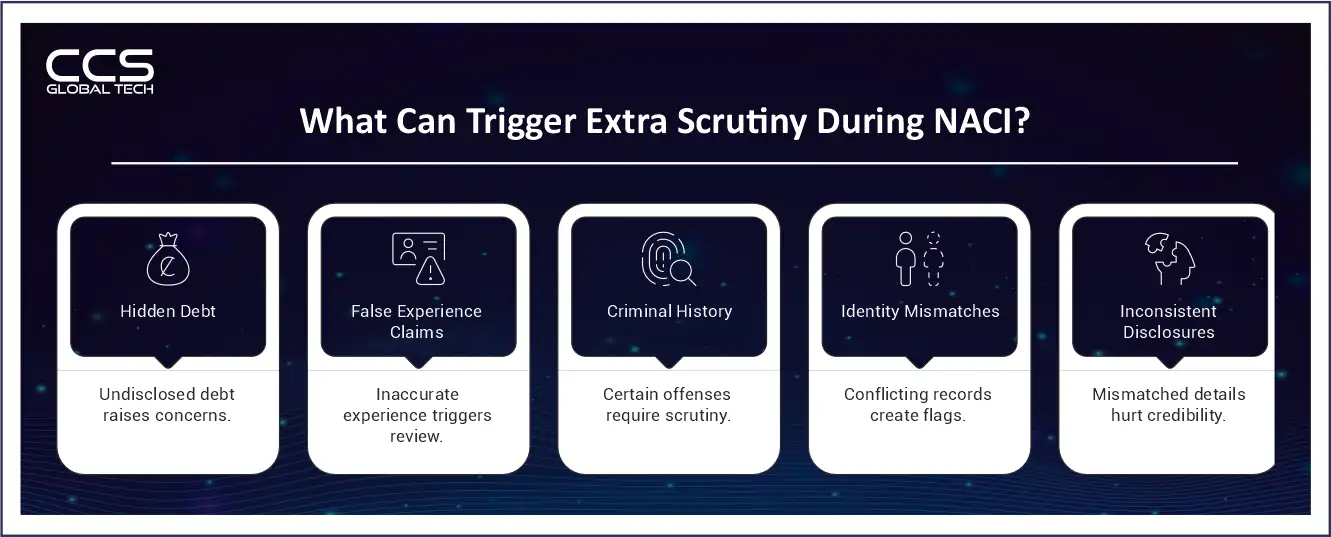
What Can Trigger Extra Security During NACI

Continuous Vetting Is Changing Clearance Monitoring

Modern security clearance programs no longer rely only on periodic reinvestigations. Under Trusted Workforce 2.0, continuous vetting uses automated systems and ongoing monitoring to identify potential security concerns after clearance approval.
This monitoring can identify arrests, financial distress, suspicious activity, foreign travel concerns, and security incidents in near real time. The shift reflects the growing need for ongoing risk assessment across the cleared workforce.

Why Demand for Cleared Talent Continues Growing?

Federal agencies continue investing heavily in cybersecurity modernization, AI programs, cloud infrastructure, intelligence systems, and digital transformation initiatives. At the same time, many experienced cleared professionals are retiring from the workforce, increasing pressure on agencies and contractors to recruit new talent.
The World Economic Forum identifies cybersecurity, AI, and data-focused positions among the fastest-growing global job categories. Organizations supporting federal missions increasingly require professionals who can both perform technically and qualify for security-sensitive environments.

The Final Say

Secret clearance has become one of the most valuable career differentiators across federal contracting, cybersecurity, intelligence support, defense operations, and government technology modernization.
The investigation process is detailed because agencies are evaluating trust, reliability, judgment, and the ability to protect sensitive national security information responsibly. For most applicants, successful outcomes depend less on perfection and more on honesty, preparation, financial responsibility, and long-term stability.
As government modernization efforts continue expanding, the demand for cleared professionals will remain strong across defense, cybersecurity, cloud infrastructure, AI, and federal IT operations.
CCS Global Tech Federal Services supports federal agencies and contractors through cleared staffing, cybersecurity workforce solutions, federal IT support, and mission-focused technology services designed for highly regulated environments.
Want to discuss workforce readiness, cleared talent strategy, and federal technology support solutions aligned to your mission goals?

FAQs

Q1- How does continuous vetting affect cleared professionals after approval?

A- Continuous vetting uses automated monitoring systems to identify arrests, financial concerns, foreign travel issues, or other potential security risks after clearance is granted.

A- Timelines vary based on background complexity, foreign contacts, financial history, and investigation workload. Many Secret clearance investigations take several months to complete. 

A- No. Investigators typically focus more on financial responsibility, repayment efforts, honesty, and overall stability than on debt alone. 

A- Missing information can trigger delays, follow-up interviews, or credibility concerns. Intentional omission is usually treated more seriously than the issue itself. 

A- Yes. Investigators may contact current and previous employers, references, coworkers, and personal contacts to verify information and evaluate trustworthiness. 

A- Foreign contacts do not automatically disqualify candidates, but investigators review them carefully to assess potential foreign influence or security risks. 

A- Unpaid taxes, repeated delinquency, unexplained wealth, unresolved collections, and ongoing financial instability often receive additional scrutiny. 

A- Most standard Secret clearance investigations do not require a polygraph. However, some intelligence and national security roles may include additional screening. 

A- Not always. Investigators evaluate severity, recency, rehabilitation efforts, behavioral patterns, and honesty during disclosure before making decisions. 

A- The most common mistake is hiding or minimizing information during the SF-86 or investigation process instead of disclosing it honestly.