


The Hiring Hurdles That Sparked Change
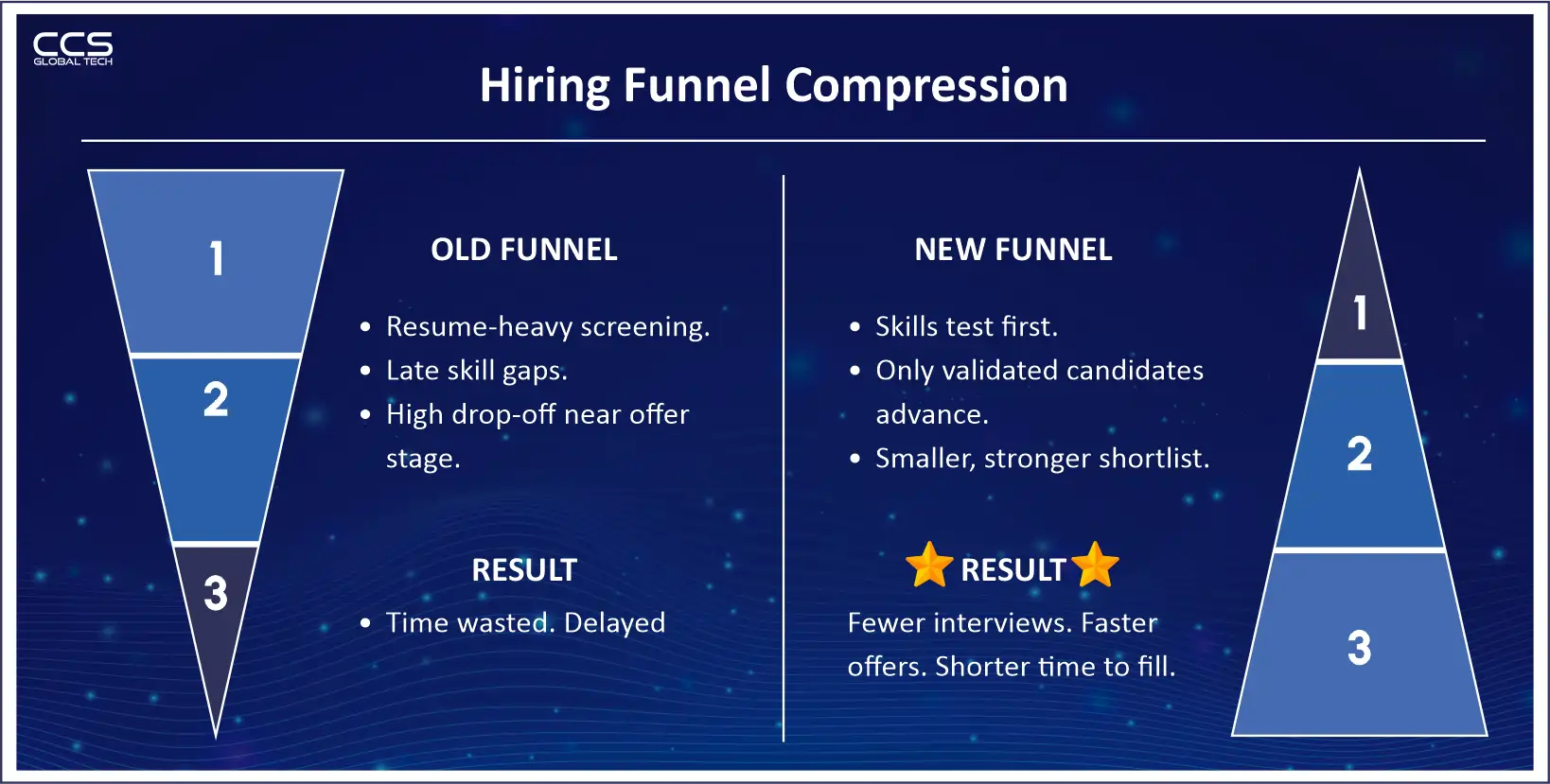
Cleared Talent Shortages: Where Demand Meets New Rules
Real-World Wins: Agencies Adapting Ahead of the Curve

Navigating Common Roadblocks
Steps to Adapt: A Practical Roadmap
- Revamp Job Descriptions: Delineate must-have skills (e.g., “Configure Cisco routers under simulated attack”) over vague education reqs. Eliminate mismatches upfront.
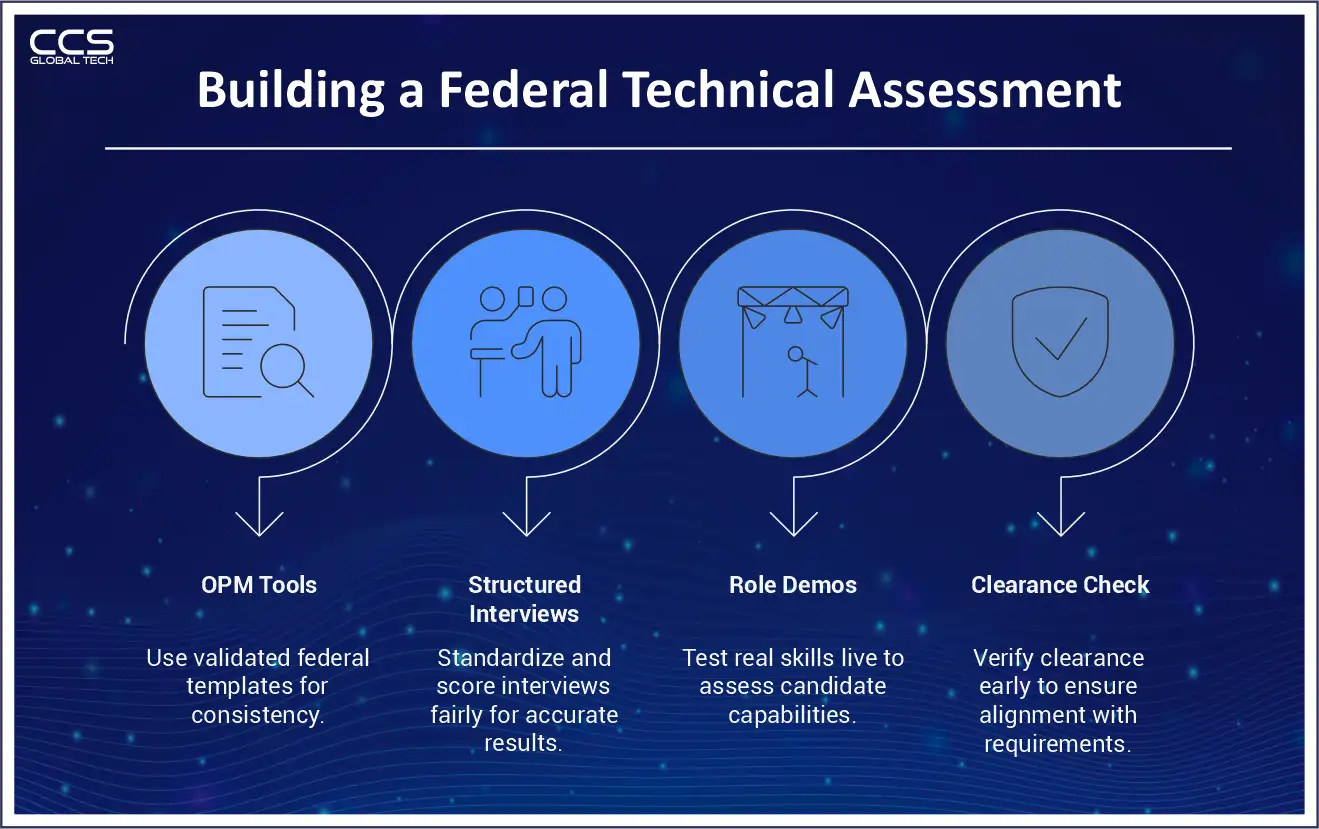
- Build Assessments: Start with free OPM resources—technical tests, structured interviews. For cleared roles, add vetting-aligned demos.
- Forecast and Pool: Submit FY2026 headcount plans to OPM/OMB for pooled actions. Target top series like 2210 for quick wins.
- Train Teams: OPM’s Federal Assessment Strategy Initiative offers sessions. Equip HR to score objectively.
- Leverage Partners: Staffing firms handle assessments, pre-vetting cleared talent to cut agency workload.
- Track Metrics: Monitor time-to-hire (aim for under 80 days) and diversity gains quarterly.
Why It Matters for Federal Missions?
Partner with CCS Global Tech for Seamless Transition
FAQs
Q1: What changes did OPM introduce for skills-based hiring in 2025?
A – OPM’s 2025 Merit Hiring Plan requires agencies to prioritize technical assessments over self-assessments and degree filters. Agencies must phase out occupational questionnaires by 2027 and use job-related evaluations to rank candidates on proven ability.
Q2: How will phasing out self-assessments impact federal hiring?
A: Self-ratings often inflate qualifications. Replacing them with structured technical evaluations improves ranking accuracy and reduces mismatches during interviews.
Q3: What types of technical assessments should agencies use?
A: Agencies should use role-specific tests, scenario-based simulations, structured interviews, and validated OPM assessment tools aligned to the job series and grade level.
Q4: How does skills-based hiring improve time to hire?
A: Early validation narrows the candidate pool faster. Managers interview fewer, better-qualified applicants, which shortens screening cycles and reduces offer fallout.
Q5: How should agencies update job descriptions under the new rules?
A: Replace vague education requirements with clear skill statements tied to real tasks. Focus on what the candidate must perform, not where they studied.
Q6: How does skills-based hiring affect cleared cybersecurity roles?
A: Technical testing combined with early clearance validation ensures candidates meet both competency and contract requirements, reducing delays in high-demand cyber positions.
Q7: What role does the Chance to Compete Act play in this shift?
A: The Act supports merit-based hiring by reducing unnecessary degree requirements and expanding access to candidates with demonstrated skills.
Q8: How can agencies prepare HR teams for the transition?
A: Provide structured interview training, standardized scoring frameworks, and access to OPM’s Federal Assessment Strategy resources to ensure objective evaluation.
Q9: How can agencies measure success under skills-based hiring?
A: Track time to hire, offer acceptance rates, diversity metrics, and retention performance quarterly to assess improvement.
Q10: What challenges should agencies expect when implementing skills-based hiring?
A: Scaling assessments across departments requires coordination, training, and alignment with clearance and labor category rules.