

The pursuit of federal contracts demands more than just technical prowess; it necessitates a sophisticated understanding of the Department of Defense’s (DoD) intricate talent acquisition landscape.
For federal contractors, the challenge is amplified by the critical and often protracted process of securing cleared personnel, a cornerstone of successful contract execution. With a staggering 12-18 month average for Top Secret/Sensitive Compartmented Information (TS/SCI) clearance processing, and an ever-shrinking pool of cleared professionals, contractors face immense pressure to identify, onboard, and retain highly specialized individuals.
This environment, characterized by intense competition, evolving compliance frameworks like CMMC 2.0, and stringent key personnel requirements, can make or break a contract. Understanding these dynamics is not merely advantageous; it is existential for maintaining contract performance, avoiding costly stop-work orders, and safeguarding invaluable Past Performance ratings.
The Problem: Cleared Talent Scarcity and Contract Risk
Federal contractors operate in a high-stakes environment where the availability of cleared talent directly correlates with their ability to bid on, win, and successfully execute critical DoD missions.
The scarcity of professionals holding active security clearances, particularly at the TS/SCI level, presents a formidable barrier to entry and growth. This challenge is further exacerbated by the “return to office” (RTO) mandates impacting the cleared workforce, as many cleared individuals, accustomed to remote or hybrid work, are now faced with limited geographic flexibility.
This acute shortage has tangible consequences for contractors. Project timelines are extended, costs escalate due to aggressive recruitment and retention efforts, and the risk of failing to meet contract deliverables looms large.
In a recent survey, 65% of federal contractors identified cleared talent acquisition as their most significant operational hurdle.
The Quantified Challenge
The cleared talent market is defined by stark realities. Consider the following:
| Metric | Data Point |
|---|---|
|
TS/SCI Processing Time |
12-18 months average for initial adjudication |
|
Cleared Workforce Shortfall |
Estimated shortage of over 50,000 cleared professionals across various agencies |
|
Competition Intensity |
70% of cleared job postings* receive fewer than 5 qualified applications |
|
Cost of Turnover |
Up to 150%-200% of an employee’s annual salary to replace a cleared professional |
*This metric comes from ClearanceJobs (a DHI Group brand). Their 2025 recruiting data highlights that the cleared market is so narrow that most technical and high-level roles receive extremely low application volumes compared to the private sector.
The numbers paint a clear picture: the demand for cleared personnel far outstrips supply, making strategic talent acquisition a non-negotiable imperative.

Federal Contractor Imperatives: Strategic Maneuvering in a Regulated Market
For federal contractors, the Department of Defense (DoD) acquisition process isn’t just a series of administrative hurdles; it is a high-stakes environment where human capital is the primary currency. Navigating these complexities is paramount to securing and performing on contracts. Failure to master the nuances of cleared talent management doesn’t just result in a vacancy: it triggers a cascade of contractual liabilities.
Security Clearance: The Long-Lead Strategic Asset
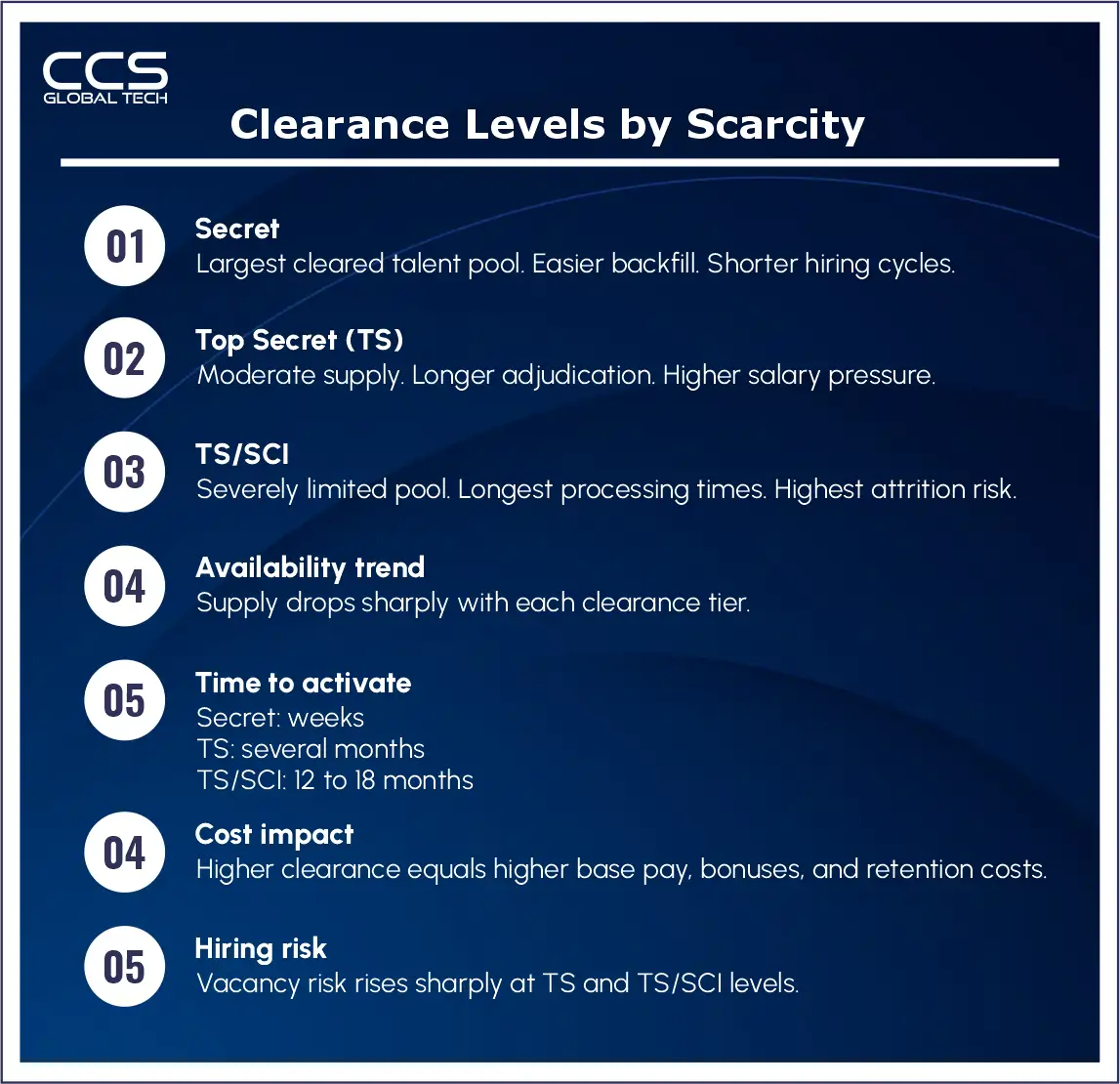
The security clearance process remains the most significant bottleneck in federal project mobilization. To maintain a competitive edge, contractors must shift from a “hired-to-clear” mindset to a “clearance-lifecycle” strategy.
- TS/SCI Processing Realities: With initial investigations for Top Secret/Sensitive Compartmented Information (TS/SCI) often spanning 12-18 months, contractors must account for this latency in their Program Management Reviews (PMRs). Relying on the Interim Clearance process is a common mitigation, but it carries inherent risk: if the final adjudication is denied, the contractor faces immediate “Key Personnel” vacancies and potential stop-work orders.
- The Reciprocity Friction: While the Trusted Traveler and Continuous Vetting (CV) initiatives under the Trusted Workforce 2.0 framework aim to improve mobility, reciprocity remains inconsistent. Contractors must verify that a candidate’s clearance is not only active but also “current” within the Joint Personnel Adjudication System (JPAS) or the Defense Information System for Security (DISS) before a contract “on-boarding” date is set.
- Navigating the Cleared Talent Pool: The pool of active TS/SCI holders is a finite resource. Contractors who successfully penetrate this market do so by maintaining “evergreen” pipelines: engaging with transitioning military personnel up to 24 months before their separation date.
Key Personnel: Contractual Obligations vs. Market Scarcity
In the DoD world, “Key Personnel” are not just employees; they are legal deliverables. Most Requests for Proposal (RFPs) mandate specific resumes that become “baked into” the contract award.
- The Replacement Trap: If a named Key Person leaves the firm, contractors are often required to provide a replacement of “equal or superior” qualifications within a strict 72-hour notification window. Failure to do so can result in a Cure Notice or a negative Past Performance Information Retrieval System (PPIRS) rating.
- Modification Negotiations: Replacing a specialized engineer or an ISSO (Information System Security Officer) often requires a formal Contract Modification. Contractors must lead these negotiations with the Contracting Officer (CO) to ensure the replacement is approved without a “down-scoping” of the labor rate or a reduction in contract value.
Compliance Frameworks: The Cost of Admission
Modern DoD contracts are inextricably linked to cybersecurity and technical compliance. A contractor’s workforce must be the first line of defense in these frameworks.
- CMMC 2.0 and NIST SP 800-171: The Cybersecurity Maturity Model Certification (CMMC) has elevated the requirement for cleared professionals who are not only technically proficient but also “security-minded”. Contractors now require staff capable of maintaining an Internal Security Plan (ISP) that meets NIST 800-171 standards to protect Controlled Unclassified Information (CUI).
- FedRAMP Integration: For contractors operating in the cloud, having a workforce that understands FedRAMP authorization boundaries is critical. This requires a subset of cleared talent that possesses both high-level security clearances and specific cloud-native certifications (AWS GovCloud, Azure Government).
Contract Performance and the Risk of Inaction
The DoD measures contractor success through the lens of Contract Performance Assessment Reporting System (CPARS). A staffing shortfall isn’t just an HR issue; it is a performance failure.
- Stop-Work Orders and Cure Notices: If a contractor cannot fill cleared seats according to the Contract Work Breakdown Structure (CWBS), the government may issue a Stop-Work Order. This halts revenue recognition while fixed costs remain, creating a significant financial burn.
- Preserving Past Performance: Your “Past Performance” rating is your most valuable asset for future bids. Consistently meeting deliverable schedules despite the cleared talent shortage is the primary differentiator between “Satisfactory” and “Exceptional” CPARS ratings.
| Challenge Area | Direct Impact on Contractor | Mitigation Strategy |
|---|---|---|
|
Clearance Latency |
Delayed Revenue Start Dates |
Utilization of Interim Clearances & Pre-vetting |
|
Key Personnel Attrition |
Breach of Contract / Cure Notice |
Succession Planning & 10% Over-staffing (Bench) |
|
CMMC Compliance |
Loss of Eligibility for Re-competes |
Staffing Specialized ISSO/ISSM Roles Early |
|
RTO Mandates |
30% Increase in Attrition |
Geographic-agnostic Hubs (where SCIF space allows) |
Key Solutions: Engineering a Resilient Cleared Talent Pipeline
To overcome the systemic barriers of the DoD acquisition landscape, federal contractors must move beyond “post-and-pray” recruitment. Implementing a sophisticated talent strategy requires a shift toward proactive risk mitigation and internal process optimization. Below is the blueprint for building a resilient cleared workforce.
1. Pre-Award Talent Mapping and “Shadow Benching”
The most successful contractors win by staffing the contract before the RFP is even released. This requires an aggressive Talent Mapping phase.
- Identifying the Incumbent Workforce: Analyze the current contractor’s workforce. Understanding their “stickiness” or potential for displacement is critical for transition planning.
- Shadow Benching: Maintain a database of pre-vetted, cleared candidates who have expressed interest in future opportunities. This “shadow bench” allows for the immediate submission of high-quality resumes during the proposal phase, ensuring your Key Personnel meet or exceed government requirements.
- Labor Market Intelligence: Use real-time data to adjust pricing models. If the market rate for a TS/SCI Polygraph Software Engineer in Northern Virginia rises by 15%, your Cost Volume must reflect this to ensure long-term retention.
2. Radical Optimization of the Security Clearance Lifecycle
While you cannot force the Defense Counterintelligence and Security Agency (DCSA) to work faster, you can eliminate “friction loss” within your own organization.
- The “Perfect File” Protocol: Implement a mandatory internal review of all SF-86 (e-QIP) submissions. Incomplete or inconsistent data is the leading cause of “reject-and-return” delays. Providing candidates with a dedicated Security Specialist to audit their filing can shave weeks off the front-end process.
- Interim Clearance Risk Management: Develop a formal risk matrix for onboarding staff on interim clearances. This includes defining “contingency tasks” that the employee can perform while awaiting final adjudication to ensure they remain billable and productive.
- Aggressive Reciprocity Management: Don’t assume the government will automatically recognize a prior clearance. Your Facility Security Officer (FSO) should initiate DISS (Defense Information System for Security) transfers on Day 1, proactively following up with the gaining command to prevent “Administrative Hang” that prevents a staffer from entering a SCIF.
3. Compliance-Driven Workforce Development
With CMMC 2.0 and NIST SP 800-171 moving from “best practice” to “contractual mandate”, your workforce must be a verified compliance asset.
- Role-Based Certification Roadmaps: Align your staffing plan with the DoD 8140 (formerly 8570) Manual. Ensure every technical staff member has a clear path to obtaining the required baseline certifications (e.g., Security+, CISSP, CEH) within the first 90 days of employment.
- Incentivized Compliance: Link annual bonuses to the maintenance of high-level certifications and successful participation in internal security audits. This transforms compliance from a “check-the-box” activity into a core cultural value.
4. Retention through “Total Value” Propositions
In a market where a TS/SCI clearance acts as a “golden ticket”, salary alone is rarely enough to prevent poaching.
- SCIF-to-Home Hybrid Models: While mission work often requires presence in a Secure Compartmented Information Facility (SCIF), top talent craves flexibility. Designate “Unclassified Innovation Days” or administrative windows where cleared staff can work remotely on non-sensitive tasks.
- Clearance Protection Agreements: Offer legal and administrative support for staff during their periodic reinvestigations or Continuous Vetting (CV) triggers. Showing employees that the firm will “defend their clearance” creates immense loyalty.
Comparison of Recruitment Models for Federal Contractors:
| Feature | Reactive (Traditional) | Proactive (Strategic) |
|---|---|---|
|
Sourcing Start |
After Contract Award |
6-12 Months Pre-RFP |
|
Clearance Strategy |
Wait for Government |
Pre-vetted & e-QIP Audited |
|
Compliance Focus |
Reactive to Audits |
Integrated into Daily Ops |
|
Risk Mitigation |
Hope-based |
Data-driven / Bench-supported |
|
Profit Margin Impact |
Eroded by High Headhunter Fees |
Stabilized by Pipeline Retention |
Case Study: Mitigating Key Personnel Risk
A mid-sized federal contractor, SecureNet Solutions, was awarded a critical DoD cybersecurity contract requiring multiple TS/SCI cleared analysts. The contract stipulated specific Key Personnel, and a sudden departure of a lead analyst during the project’s initial phase threatened a stop-work order.
SecureNet’s proactive strategy:
- Bench Strength: Prior to the contract award, SecureNet had identified and engaged with a pool of pre-vetted, TS/SCI cleared cybersecurity analysts, anticipating potential attrition.
- Expedited Replacement: Within 72 hours of the departure, SecureNet identified a suitable replacement from their pre-qualified talent pool.
- Seamless Transition: They immediately initiated the key personnel replacement approval process, providing the contracting officer with a detailed resumé and clearance verification.
- Internal Clearance Liaison: Their dedicated clearance liaison expedited the paperwork and ensured all necessary forms were submitted correctly and promptly.
- Outcome: By leveraging their pre-existing talent pipeline and efficient internal processes, SecureNet secured approval for the replacement within two weeks, minimizing project disruption and avoiding a stop-work order. Their strong Past Performance rating remained intact, demonstrating the critical importance of strategic talent management.

Pivotal Implementation Steps
- Assess Current Talent Gaps: Conduct a thorough audit of current and projected contract needs against existing cleared staff.
- Develop a Cleared Talent Acquisition Plan: Outline specific strategies for proactive recruitment, pipeline development, and retention.
- Invest in Compliance Expertise: Ensure internal teams are well-versed in CMMC 2.0, FedRAMP, NIST, and other DoD security requirements.
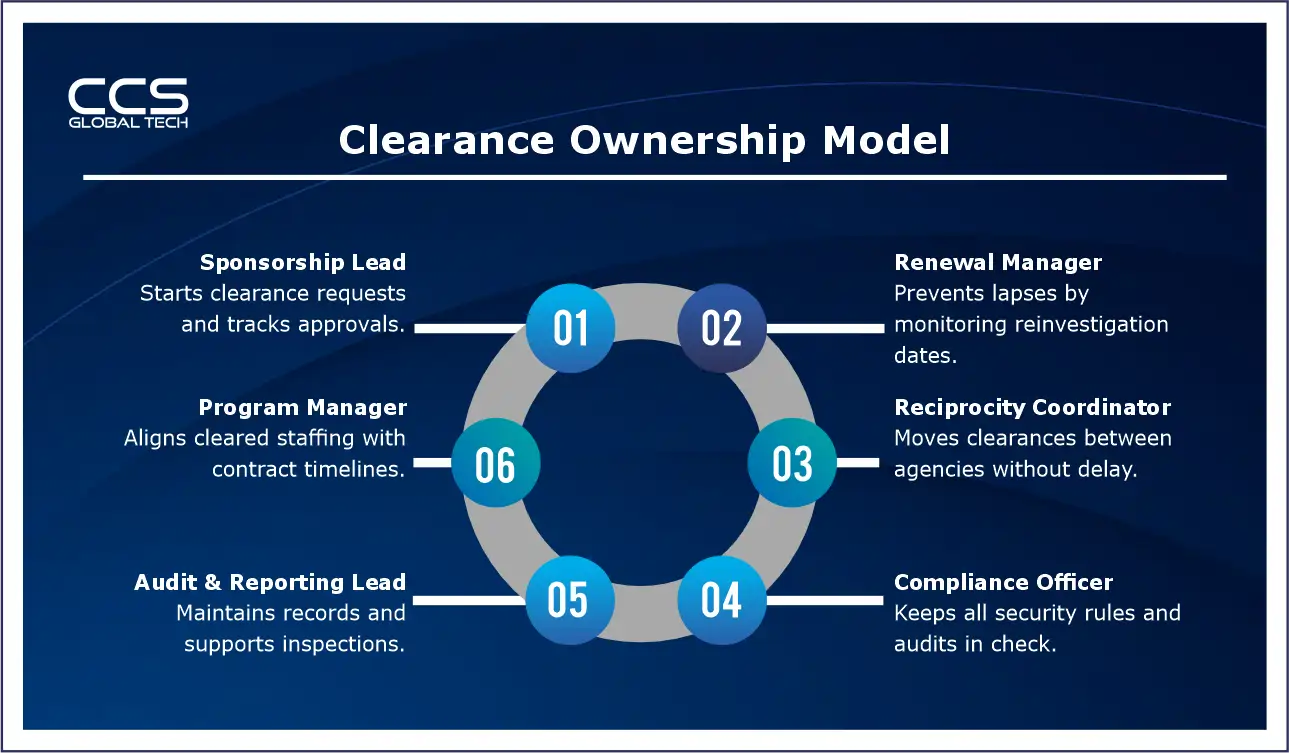
- Establish a Clearance Management Function: Designate individuals or teams responsible for overseeing and streamlining the clearance process.
- Foster a Culture of Retention: Implement programs and initiatives designed to keep cleared professionals engaged and valued.
Crucial Questions to Keep in Mind
The margin for error in Department of Defense contracting is narrowing as the barrier to entry for cleared talent rises. While technical capability is the price of admission, the ability to sustain a cleared workforce under shifting regulatory and geographic pressures is the true differentiator for growth. To determine if your current talent strategy is robust enough to protect your mission-critical objectives, consider the following points of strategic urgency:
- How significantly are clearance delays and talent scarcity impacting your ability to bid on and win new DoD contracts?
- What is the true cost of key personnel turnover, including lost productivity, contractual penalties, and damage to your Past Performance ratings?
- Are you fully prepared to meet evolving compliance frameworks like CMMC 2.0, and do you have the cleared talent in place to ensure continuous adherence?
Partnering for Cleared Success
The intricate world of DoD talent acquisition demands specialized expertise and a proactive approach. The stakes are too high for anything less than a comprehensive strategy. CCS Global Tech offers unparalleled federal staffing solutions, connecting you with the precise cleared talent needed to meet stringent contract requirements and navigate complex compliance landscapes. Our deep understanding of the DoD ecosystem ensures your success.
FAQs
Q1 – What are the first acquisition phases where cleared talent requirements are defined?
A: Cleared labor needs are established during market research and requirements development, when agencies set labor categories, clearance levels, and Key Personnel clauses.
Q2 – How early should contractors start identifying cleared candidates before an RFP is released?
A: Leading contractors begin pipeline development during the pre-solicitation phase to reduce risk once the award is made.
Q3 – Why are Key Personnel clauses critical in cleared staffing acquisitions?
A: They lock specific roles and clearance profiles into the contract and require CO approval for any replacement, increasing delivery and margin risk.
Q4 – How does clearance sponsorship timing affect contract start dates?
A: Late sponsorship often delays onboarding by months, creating schedule slippage and lost billable revenue.
Q5 – What role does reciprocity play in DoD hiring speed?
A: Fast reciprocity enables cleared workers to transfer between agencies, reducing re-adjudication delays and vacancy periods.
Q6 – How do proposal staffing plans influence source selection scores?
A: Proven access to active clearances improves technical ratings and lowers perceived performance risk.
Q7 – When should primes activate their cleared bench strategy?
A: During capture and proposal stages, not after award, to ensure Day-1 staffing readiness.
Q8 – How does interim clearance use impact contract performance?
A: Interim access accelerates onboarding but limits role eligibility until full adjudication completes.
Q9 – What staffing risks most often trigger Cure Notices or Stop-Work Orders?
A: Missing cleared headcount, delayed KP replacements, and expired clearances.
Q10 – How do specialized staffing partners reduce acquisition risk?
A: They provide pre-vetted cleared pools, manage crossover timing, and shorten replacement cycles.