
Understanding NACI Security Clearance: Eligibility Requirements, Process, and Federal Job Opportunities

Understanding NACI Security Clearance
For many professionals entering the federal workforce, NACI clearance is one of the first major steps toward working in government environments, contractor programs, and federal technology systems. Although NACI is not a classified national security clearance like Secret or Top Secret, it remains one of the most widely used federal background investigation processes across civilian agencies and contractor operations.
Federal agencies rely on NACI investigations to evaluate whether applicants demonstrate the trustworthiness, reliability, honesty, and professional judgment required to work within government systems and facilities. These investigations are commonly required for positions involving federal databases, healthcare systems, logistics operations, public trust responsibilities, administrative support, and IT infrastructure environments.
Demand for vetted federal talent continues rising as agencies expand cybersecurity modernization, cloud transformation, digital infrastructure, and operational support initiatives. According to the U.S. Bureau of Labor Statistics, employment for information security analysts is projected to grow 29% through 2033, significantly faster than average.
At the same time, government contractors continue facing challenges hiring candidates who understand federal screening requirements and can successfully navigate the investigation process.
Understanding how NACI investigations work helps candidates prepare more effectively, reduce delays, and improve readiness for federal career opportunities.

What Is a NACI Security Clearance?

NACI stands for National Agency Check with Inquiries. It is a federal background investigation process used primarily for civilian government employees, contractor personnel, and public trust positions that do not require access to classified national security information.

Although many professionals refer to it as a “security clearance,” NACI is technically a suitability investigation rather than a classified clearance like Secret or Top Secret.
The purpose of a NACI investigation is to determine whether an applicant can be trusted to work responsibly within federal systems, government facilities, and operational environments. These investigations are commonly required across:
  • Federal administrative roles  
  • Contractor support positions  
  • Healthcare operations  
  • Cybersecurity support teams  
  • Logistics environments  
  • Federal customer service programs  
  • IT infrastructure support  
  • Cloud migration initiatives  
Investigators evaluate multiple areas including criminal history, employment consistency, financial responsibility, identity verification, and behavioral reliability.
The Defense Counterintelligence and Security Agency oversees significant portions of the federal personnel vetting process supporting national security and federal workforce hiring.
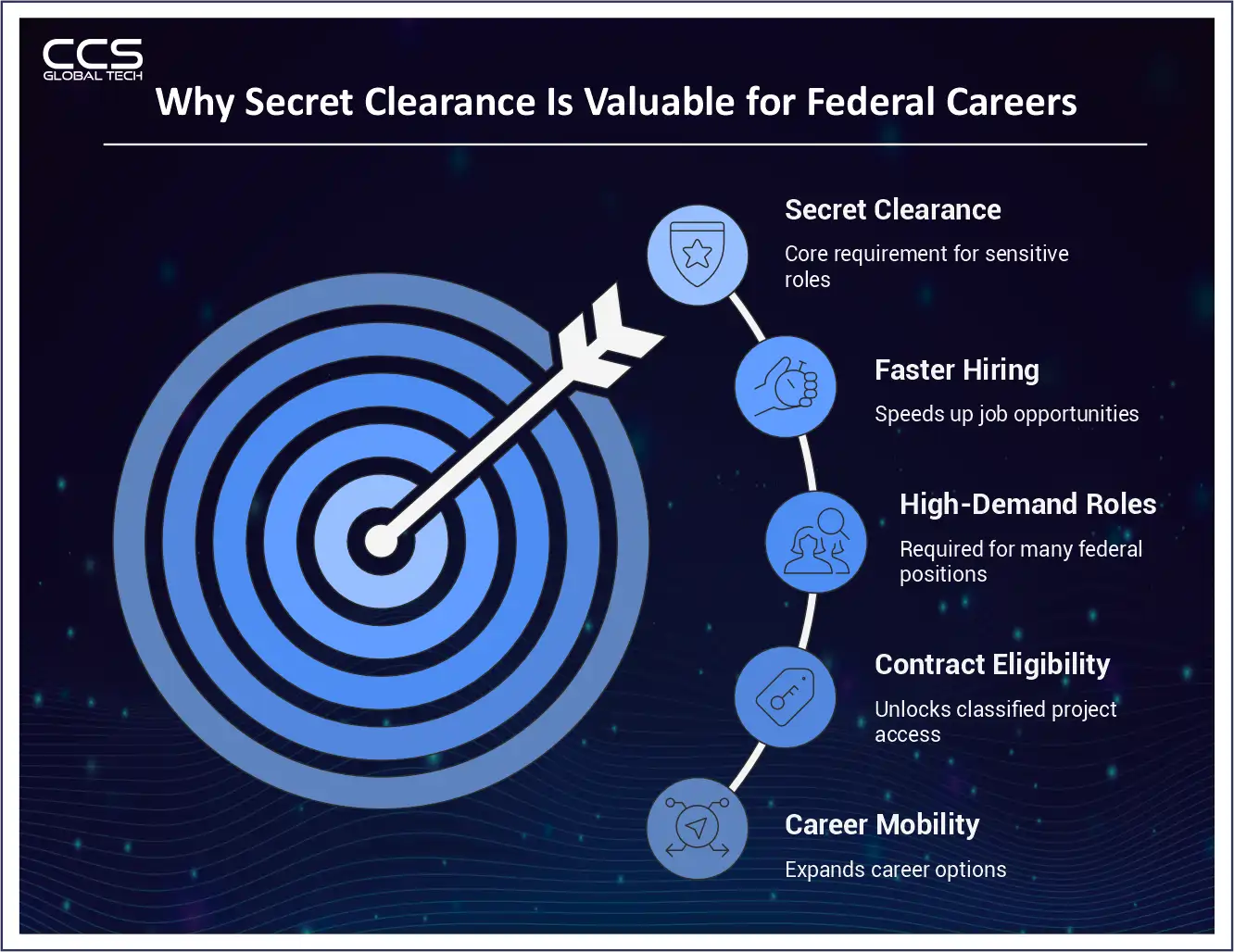
Why Secrete Clearance is Valuable for Federal Careers

Why NACI Investigations Matter in Federal Hiring?

Federal agencies and contractors handle enormous amounts of sensitive information even in environments that do not involve classified intelligence. Employees may still access government databases, citizen records, healthcare systems, operational infrastructure, contractor environments, and federal IT networks.
Because of this, agencies need confidence that individuals working within these systems demonstrate professionalism, reliability, and sound judgment.
NACI investigations help reduce risks involving:
  • Identity fraud  
  • Insider threats  
  • Unauthorized system access  
  • Operational disruption  
  • Workplace misconduct  
  • Financial vulnerability  

As cyber threats and digital identity fraud continue increasing, workforce screening has become more important across nearly every government-facing industry.

NACI vs Secret Clearance

One of the most common misunderstandings in federal hiring is assuming NACI and Secret clearance are the same process. They are not.
A Secret clearance grants access to classified national security information. NACI investigations focus primarily on suitability and trustworthiness for non-classified federal work environments.

Secret clearance investigations generally involve broader national security reviews, deeper background investigations, and additional scrutiny involving foreign influence and classified access eligibility.
NACI investigations remain less extensive but still involve significant review of:
  • Criminal records  
  • Employment history  
  • Financial responsibility  
  • Identity verification  
  • Professional conduct  
  • Disclosure honesty
Many professionals begin their federal careers with NACI investigations before later moving into Secret or Top Secret clearance environments.

Eligibility Requirements for NACI

To qualify for a NACI investigation, candidates must generally meet baseline federal employment requirements connected to the role itself.
Applicants are usually required to:
  • Be legally authorized to work in the United States  
  • Complete required federal investigation forms  
  • Provide accurate personal history  
  • Submit fingerprints  
  • Pass identity verification checks  
  • Demonstrate suitability for federal work environments  
Certain agencies or contracts may include additional screening standards depending on operational sensitivity.
Investigators place significant emphasis on:
Issues that commonly trigger additional review include criminal conduct, repeated financial instability, employment inconsistencies, identity concerns, unresolved legal issues, or incomplete disclosure during the investigation process.
Importantly, older issues do not automatically disqualify candidates. Investigators often focus more heavily on patterns of behavior, rehabilitation efforts, and disclosure honesty.

How the NACI Clearance Process Works?

Step 1: Sponsorship Through a Federal Agency or Contractor

The NACI process begins only after a federal agency or authorized government contractor sponsors the investigation for a specific role. Individuals cannot independently apply for NACI approval on their own.
Sponsorship typically happens after a conditional job offer is issued for positions involving federal systems, facilities, databases, or operational support environments. Many civilian agencies, defense contractors, healthcare programs, logistics operations, and federal IT modernization projects require NACI investigations before employees receive system credentials or facility access.
For example, a cloud support technician hired to support a civilian agency modernization initiative may require NACI approval before accessing government infrastructure systems or operational environments.

Step 2: Completing Federal Background Investigation Forms

After sponsorship begins, candidates must complete detailed federal background investigation forms that collect personal, professional, financial, and legal history. The forms require disclosure of employment history, residential addresses, criminal records, financial concerns, education, military service, and other personal background details.
The Office of the Director of National Intelligence identifies personal conduct and incomplete disclosure as major adjudication concerns within federal vetting programs. Investigators place substantial importance on honesty and full disclosure throughout the process.

Step 3: Fingerprinting and Criminal History Checks

Once the forms are submitted, the formal investigation process begins with fingerprinting and criminal history checks. Federal investigators review FBI fingerprint records, federal databases, state criminal systems, and county court records to verify identity and evaluate behavioral history. This stage also includes identity verification checks designed to identify inconsistencies involving aliases, addresses, or previous records.
The broader objective is not simply to confirm technical qualifications. Investigators are evaluating whether the applicant demonstrates reliability, trustworthiness, and sound judgment necessary for federal work environments.
Identity verification has become increasingly important as workforce fraud and credential falsification continue increasing across hiring environments.
A 2025 report from PwC found that skills required in AI-exposed occupations are changing 66% faster than less AI-exposed roles, increasing pressure on organizations to strengthen workforce verification and screening practices.

Step 4: Employment and Reference Verification

Investigators then begin validating employment history, educational background, and professional references. Current employers, former supervisors, coworkers, and personal references may be contacted to confirm workplace behavior, professionalism, reliability, and consistency with the information submitted during the investigation process.
Investigators are not only confirming qualifications. They are evaluating patterns involving:
  • Honesty  
  • Reliability  
  • Judgment  
  • Professionalism  
  • Accountability 
One contractor applicant supporting a federal logistics program reported extensive government systems experience during onboarding. During employment verification, investigators discovered portions of the claimed timeline involved unrelated commercial retail work. The inconsistency created additional review requirements and delayed project onboarding significantly.

Accurate reporting remains one of the most important parts of the investigation process.

Step 5: Financial Review and Risk Assessment

Financial history becomes another important review category during NACI investigations. Investigators may examine unpaid debt, collections, tax issues, repeated delinquency, bankruptcies, or unexplained financial behavior.
Financial concerns alone do not automatically disqualify candidates. Investigators focus more heavily on accountability, repayment efforts, financial stability, and whether the applicant disclosed the issues honestly.
According to SEAD-4 guidelines, financial considerations remain one of the most common review categories within federal vetting investigations.
Candidates who demonstrate responsible repayment efforts and long-term financial stability are often viewed more favorably than candidates who attempt to hide unresolved concerns.

Step 6: Adjudication and Final Suitability Review

After the investigation concludes, adjudicators conduct a final suitability review using the “whole person” approach. Rather than focusing on one isolated issue, adjudicators evaluate the applicant’s overall behavior, honesty, reliability, professionalism, and long-term stability.
The review considers:
  • Severity of concerns  
  • Behavioral patterns  
  • Time elapsed  
  • Rehabilitation efforts  
  • Employment consistency  
  • Disclosure honesty
The process is designed to evaluate trustworthiness and operational risk rather than identify perfect candidates. Many applicants with older financial or legal concerns still receive favorable outcomes when supported by accountability and long-term stability.

Federal Job Opportunities That Commonly Require NACI

NACI investigations are widely used across civilian federal agencies and contractor environments.
Common roles include:
  • Help desk support  
  • Administrative specialists  
  • Federal customer support  
  • Logistics coordinators  
  • Healthcare operations support  
  • Contractor operations staff  
  • Records management professionals  
  • Federal IT support teams  
  • Cloud migration support personnel  
  • Cybersecurity support analysts 
As agencies continue modernizing infrastructure and digital operations, demand for vetted support professionals continues expanding across government programs.

Why Contractors Value Candidates with Federal Vetting Experience?

Federal contractors often prioritize candidates who already understand government compliance environments and workforce screening expectations. Professionals who have previously completed federal vetting processes often move through onboarding faster and create lower operational risk for time-sensitive projects.
For contractors supporting federal modernization initiatives, workforce readiness directly impacts:
  • Delivery timelines  
  • Compliance requirements  
  • Operational continuity  
  • Contract performance
Candidates who understand federal hiring standards and maintain organized records are often viewed more competitively during recruitment.
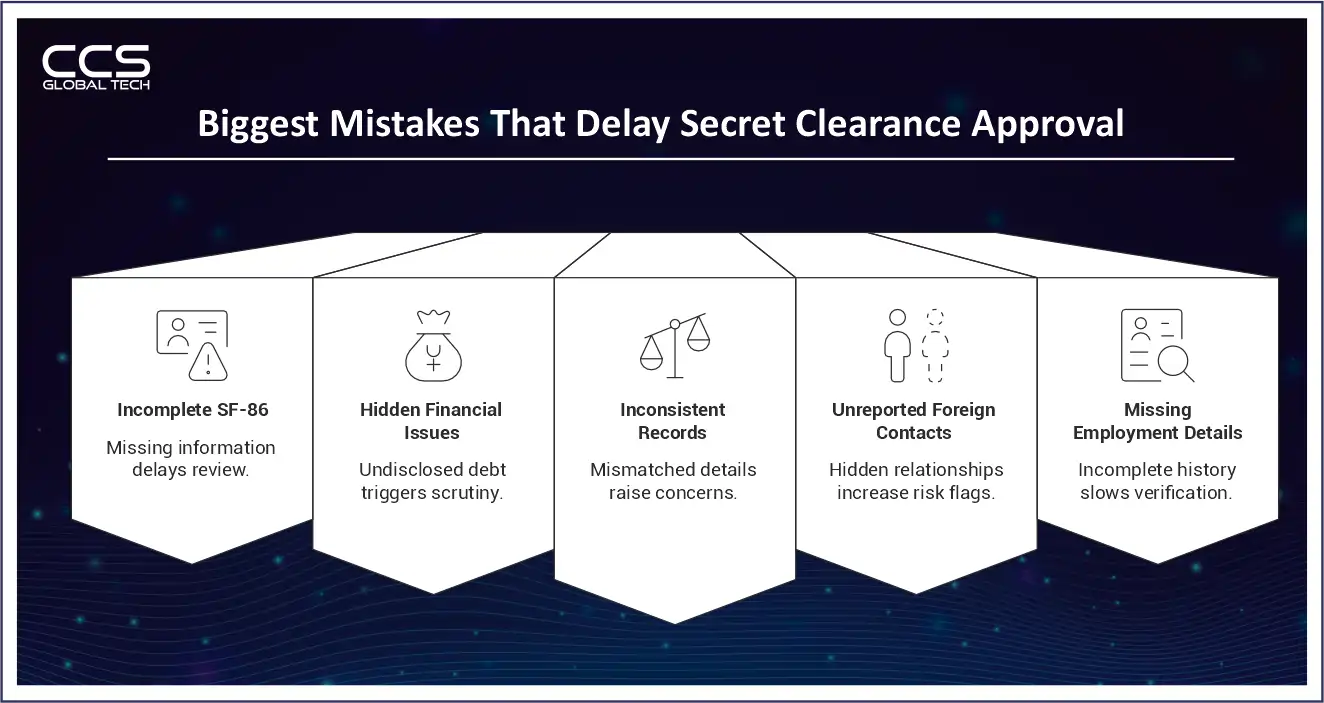
Biggest Mistake That Delay Secrete Clearance Approval

Common Reasons NACI Investigations Get Delayed

Applicants who organize records early and provide accurate disclosures generally experience smoother investigation timelines. Transparency consistently reduces investigation complications and additional review requirements.

Several issues commonly create delays during NACI investigations. These include incomplete forms, inaccurate employment dates, missing residential history, undisclosed criminal records, unresolved financial concerns, and identity mismatches across databases.

Continuous Vetting Is Expanding Across Federal Hiring

Federal workforce screening no longer ends after hiring approval. Under Trusted Workforce 2.0, agencies increasingly use continuous vetting systems designed to identify arrests, financial distress, suspicious activity, identity concerns, and security incidents after onboarding.
This reflects the government’s broader shift toward ongoing workforce risk management across federal environments.

The Last Say

NACI investigations remain one of the most important entry points into federal employment, contractor operations, government technology environments, and public trust positions.
Although the process is less extensive than Secret or Top Secret clearance investigations, agencies still apply significant scrutiny to honesty, reliability, professionalism, and overall suitability.
Candidates who prepare carefully, disclose information accurately, maintain financial responsibility, and organize documentation properly often improve their chances of smoother investigation outcomes.
As federal agencies continue investing in cybersecurity modernization, digital transformation, cloud infrastructure, and operational resilience, the demand for vetted professionals across government environments will continue growing.
CCS Global Tech Federal Services supports agencies and contractors through federal staffing, cybersecurity workforce solutions, federal IT modernization support, and mission-focused technology services designed for highly regulated environments.
Is your organization preparing for upcoming federal initiatives or facing workforce readiness challenges?

FAQs

Q1- Can you apply for a NACI investigation without a federal job offer?

A- No. A federal agency or authorized government contractor must sponsor the NACI investigation based on a specific job requirement. 

A- Timelines vary depending on workload, background complexity, employment history, and record verification. Many NACI investigations take several weeks to a few months.

A- No. NACI is primarily a suitability and background investigation process for non-classified federal and public trust roles. 

A- NACI is commonly required for federal administrative roles, contractor support positions, healthcare operations, federal IT support, logistics, and public trust jobs. 

A- Yes. Investigators review financial responsibility, unpaid debt, collections, and repayment efforts to evaluate reliability and judgment. 

A- Yes. Investigators may contact current employers, previous supervisors, coworkers, educational institutions, and references to verify information and assess trustworthiness. 

A- Missing or inconsistent information can create delays, trigger additional review, and raise concerns about disclosure honesty and reliability. 

A- Not always. Investigators evaluate severity, time elapsed, rehabilitation efforts, behavioral patterns, and disclosure honesty before making suitability decisions. 

A- Yes. Investigators review foreign relationships and travel history to assess potential risks, foreign influence concerns, and disclosure accuracy. 

A- NACI focuses on suitability for non-classified federal positions, while Secret clearance allows access to classified national security information.