
How AI Is Transforming Everyday Transit Operations
Transit agencies operate in constant motion but behind every route is a daily battle which includes maintenance backlogs, scheduling strain, and unpredictable ridership swings. These aren’t isolated challenges; they’re persistent pressures that require smarter, faster, and more strategic action.
The Operational Realities Transit Agencies Face
- Preventing unplanned vehicle downtime
- Aligning service levels with changing rider demand
- Delivering accurate and real-time service updates
- Strengthen workforce planning to reduce shortages and keep costs predictable
How AI Improves On-Time Performance
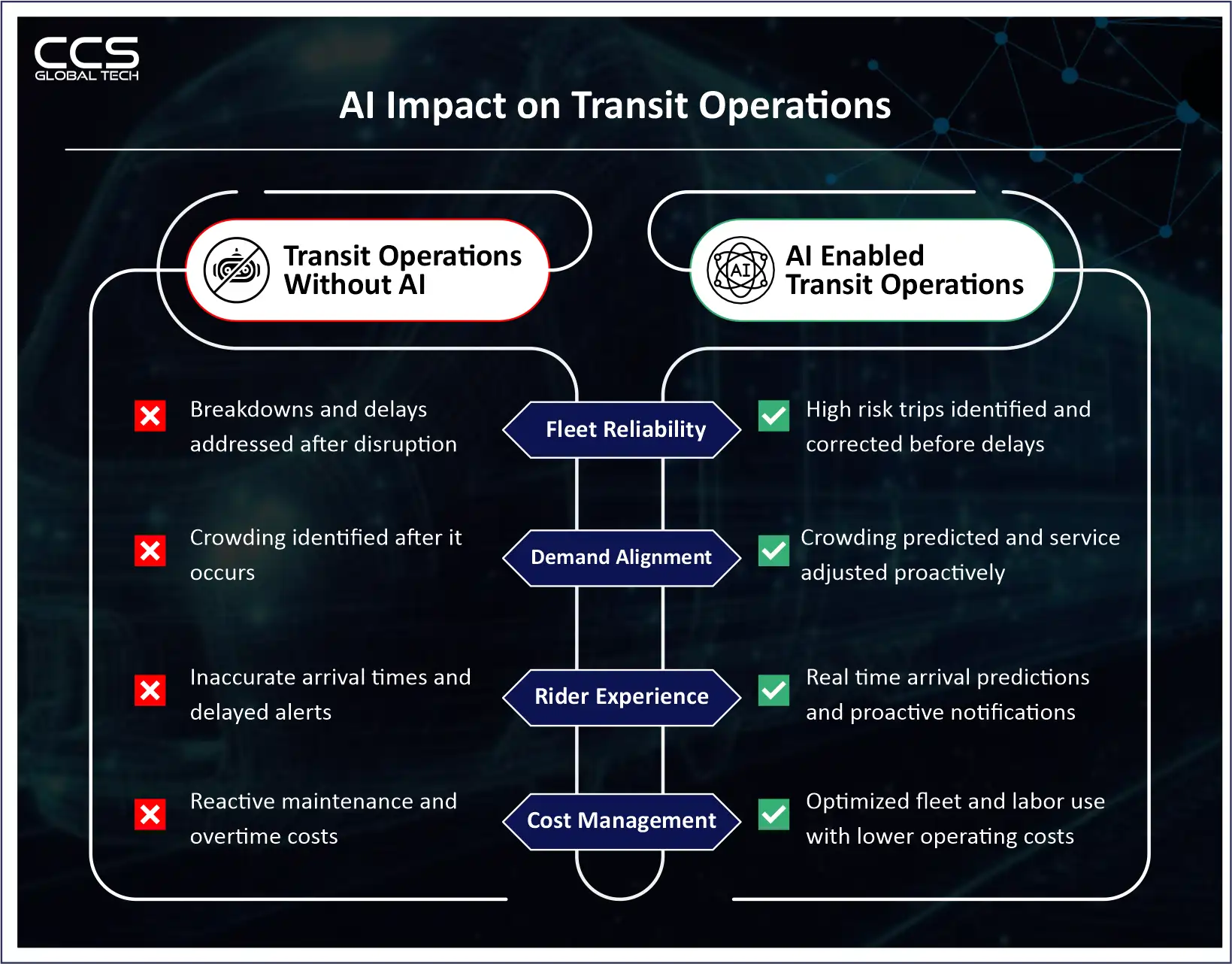
1. Predictive Maintenance for Greater Fleet Reliability
- Flags high-risk trips early
- Identifies routes likely to fall behind
- Recommends recovery actions to dispatch teams
- Fewer missed connections
- Higher route performance
- Reduced overtime and labor costs
2. Aligning Service with Real-World Demand
- Predicts crowding before it occurs
- Identifies underutilized trips
- Recommends frequency and capacity adjustments
- Less overcrowding
- Improved operational efficiency
- Smarter service planning
3. Enhancing the Rider Experience
- Delivers more accurate arrival predictions based on real-time conditions
- Notify about unexpected disruptions
- More reliable schedules and accurate arrivals riders can rely on
- High public confidence and satisfaction
4. Supporting Smarter Cost Management
- Optimizes fleet and labor utilization across daily operations
- Reduces cost of reactive maintenance, recovery, and emergency interventions
- Lower costs across maintenance, fuel, and scheduling
- Stronger financial case for continued infrastructure investment
How CCS Global Tech Supports Intelligent Transit
- On-time performance analytics
- Predictive fleet maintenance
- Ridership forecasting
- Cost optimization strategies
- And more.
FAQs
1. What is AI enablement in public transportation?
A: AI enablement in public transportation refers to the integration of artificial intelligence into transit operations, maintenance, and planning to enhance reliability, efficiency, and decision-making using real-time and historical data.
2. How does AI improve transit reliability?
A: AI enhances reliability by predicting delays, identifying at-risk trips, and enabling agencies to intervene early, preventing service disruptions from affecting riders.
3. Can AI help reduce delays in transit systems?
A: Yes. AI can detect early signs of congestion, vehicle bunching, or schedule deviations, allowing dispatch teams to adjust service proactively and minimize cascading delays.
4. How does predictive maintenance work in public transit?
A: Predictive maintenance uses AI to analyze equipment usage, wear patterns, service logs, and failure history to schedule repairs before breakdowns occur, reducing emergency maintenance and service interruptions.
5. What data is required to use AI in transit operations?
A: AI in transit typically uses vehicle location data, maintenance records, ridership data, traffic information, and weather inputs to generate accurate predictions and operational insights.
6. Is AI suitable for both bus and rail transit systems?
A: Yes. AI can be applied across bus, rail, metro, light rail, and paratransit systems to optimize scheduling, fleet health, and rider experience.
7. How does AI improve the rider experience?
A: AI enhances the rider experience by improving ETA accuracy, reducing unexpected delays, lowering breakdown-related cancellations, and providing more consistent service.
8. How long does it take to implement AI in a transit agency?
A: Implementation timelines vary, but agencies often see early results within a few months through pilot programs focused on specific use cases like delay prediction or maintenance optimization.
9. Is AI adoption expensive for public transit agencies?
A: AI adoption does not always require large upfront investment. Many agencies start with targeted, high-impact use cases that deliver measurable returns and cost savings before scaling.
10. How does AI help transit agencies control operating costs?
A: AI helps reduce overtime, emergency repairs, fuel waste, and inefficient scheduling by enabling smarter resource allocation and proactive decision-making.