
Federal contract protests rarely make headlines inside an organization. The legal team handles filings, capture teams move on to the next opportunity, and leadership focuses on revenue forecasts. But for the people teams and hiring managers closest to the work, a protest can feel like someone has hit the pause button on months of careful recruiting and planning.
When a Win Turns Into a Waiting Game?
Picture a mid-sized federal contractor that just won a strategic cybersecurity contract with a civilian agency. The leadership team celebrates the award, recruiters scramble to finalize offers, and program managers start planning the transition. The talent pipeline is strong: a mix of incumbent staff, new hires with rare cloud security skills, and cleared analysts ready to move from commercial roles into federal work.
Then the email arrives: a competitor has filed a post-award protest. Performance is stayed. Start dates are “to be determined.” Recruiters have to call candidates who just gave notice to their current employers and tell them to wait “a few weeks” while things get sorted out. Weeks quietly become months. The legal team is confident, but the people on the other end of the phone hear only uncertainty.
The Human Side of Contract Protests
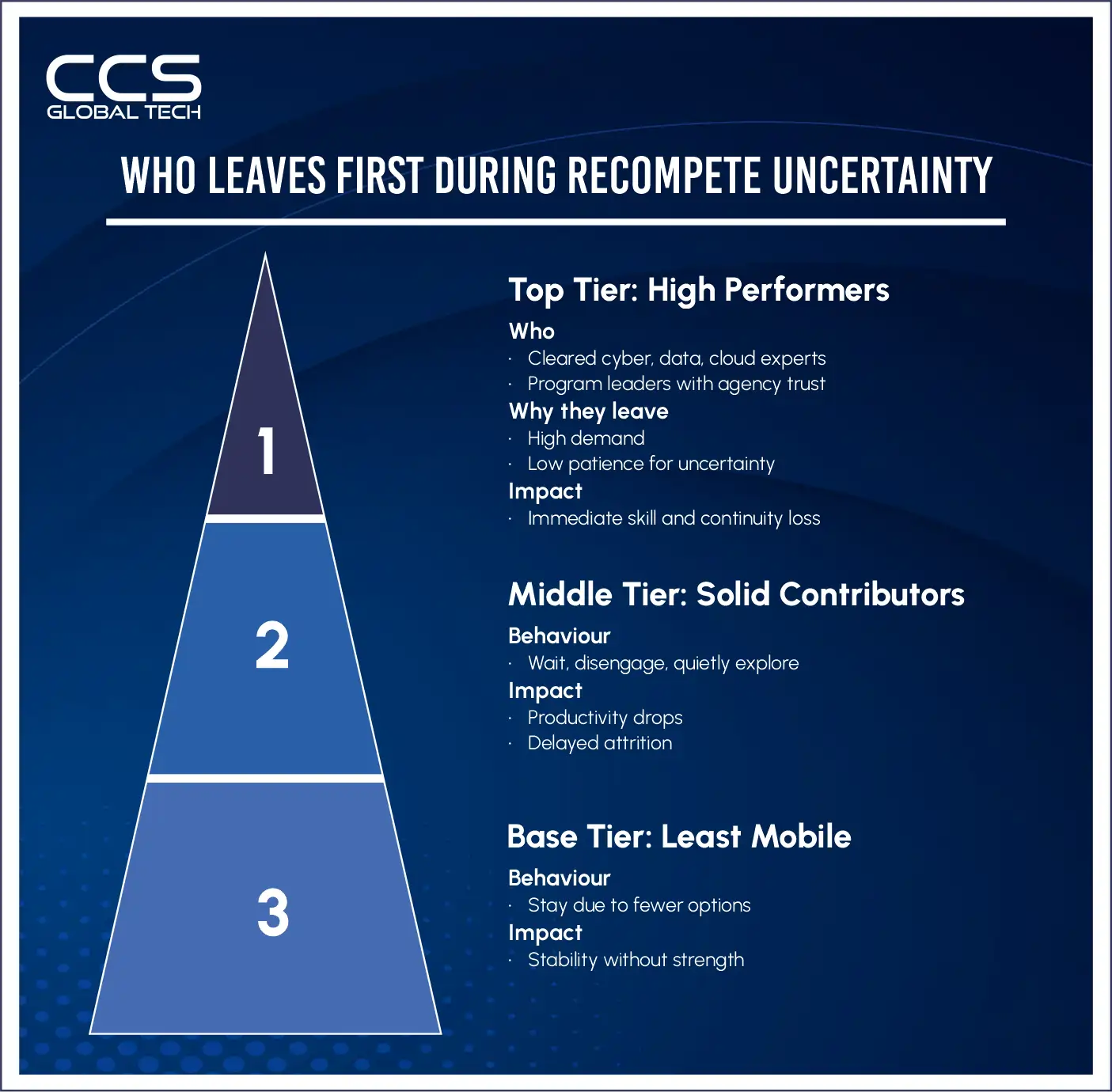
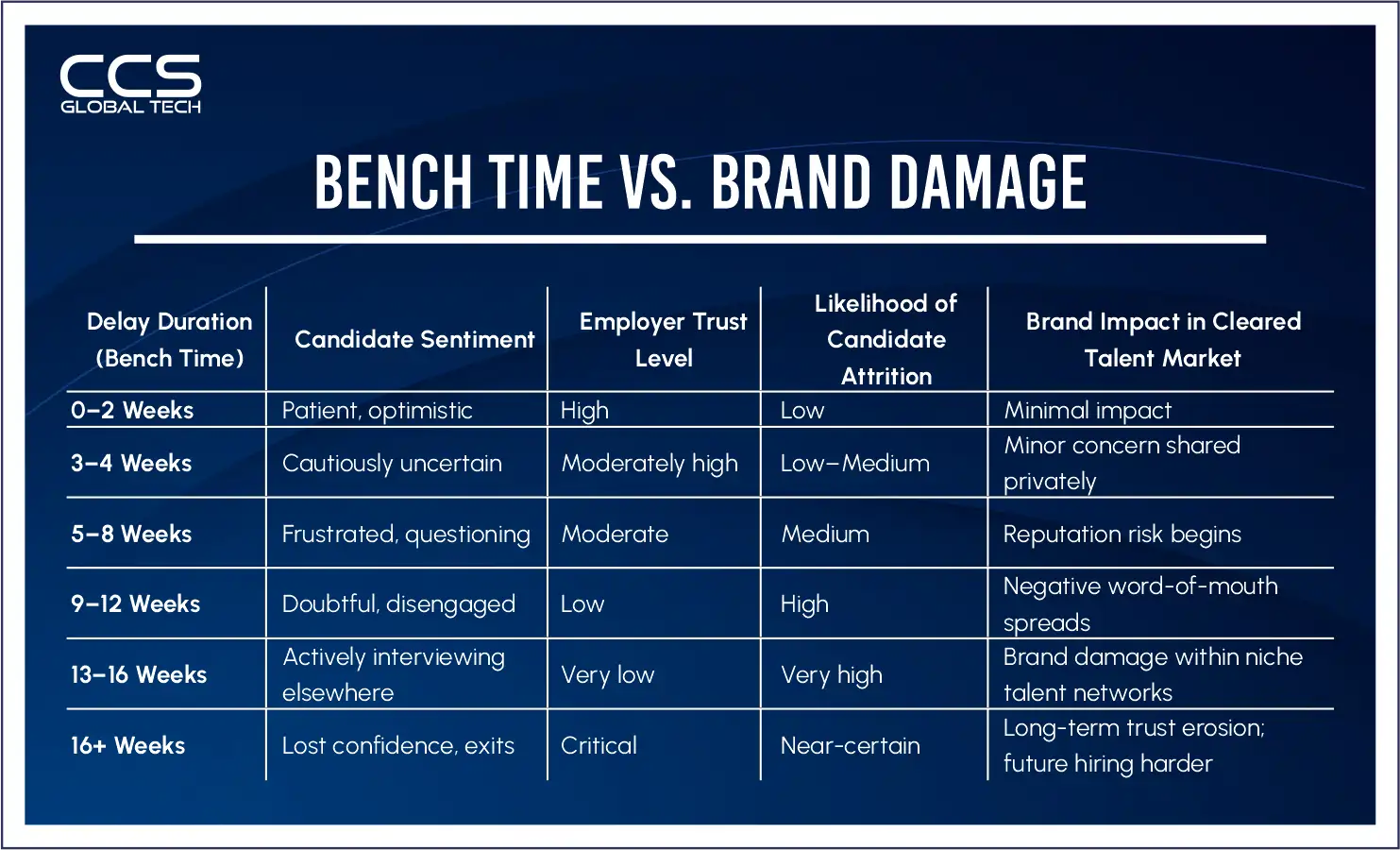
This is where the impact of a protest becomes real. High-demand professionals, especially in cybersecurity, data, and cloud engineering, have options. They may be excited about the mission, but they cannot sit on the bench indefinitely. After a couple of delayed start dates, those same candidates start asking hard questions:
- “Will this contract really move forward?”
- “What happens to me if you lose the protest?”
- “Can you guarantee a start date, or should I pursue another offer?”
Without a clear plan, organizations lose the very people they worked hardest to attract. The cost is more than just recruiting fees. Security processing, client interviews, internal approvals, and the time spent aligning candidates with specific roles all add up. When a protest derails those efforts, the organization has to start over, often under tighter timelines and with a damaged employer reputation in that talent community.
A Tale of Two Contractors
Now imagine two different contractors facing similar protest scenarios.
The first treats the protest as purely a legal matter. Candidates get sporadic updates: “We’re still waiting,” “The government hasn’t decided yet,” “We’ll let you know.” Some have already left their previous roles or turned down competing offers. Others simply get tired of the uncertainty and move on. By the time the protest is resolved in the contractor’s favor, several key positions are vacant again. The contract kicks off late, the team is incomplete, and the agency’s first impression is that the new partner is scrambling.
The second contractor approaches the same risk differently. Well before the award, HR, recruiting, and contracts leaders sit down together and ask, “What if this gets protested?” They design contingent offers with clear language about possible delays. They build phased start plans, where critical roles have defined fallback assignments inside the company if the work is paused. Candidates know exactly what will happen if a protest is filed, how long the organization will hold their offer, and what options they have if the delay stretches beyond a reasonable window.
When the protest comes, and it does-the second contractor moves into a prepared rhythm:
- Immediate, transparent communication to all contingent hires.
- Regular status updates, even when the update is “nothing new yet.”
- Short-term internal projects or training opportunities for top candidates the company chooses to retain on its own dime.
Some candidates still leave; that is inevitable. But many stay because they feel informed and respected. By the time the protest is resolved, the contractor can field a ready, mostly intact team-one that starts strong and earns credibility with the customer from day one.

What This Means for Your Talent Investment?
The difference between those two stories is not luck. It is how seriously the organization treats talent as an asset worth protecting when the market becomes unpredictable. Federal contract protests are part of the landscape, but they do not have to ruin your staffing strategy.
Protecting your investment starts with a simple mindset shift: assume every major award or recompete carries some level of protest risk, and plan your people strategy accordingly. That planning can include:
- Building realistic timelines that account for potential delays instead of promising aggressive start dates you cannot control.
- Designing offer templates that explain contingent conditions in plain language so candidates never feel misled.
- Prioritizing which roles truly must be locked in immediately and which can be filled after the protest window closes.
When HR, recruiting, and program leaders collaborate early, the organization can balance financial risk with the need to secure scarce skills.
Keeping Incumbents Engaged During Uncertainty
Here, communication matters more than ever. Incumbents want to know:
- Will my job still exist after this transition?
- If another company wins, will you try to place me elsewhere?
- Are you being honest about our chances, or just telling us to wait and see?
Organizations that stay silent during this phase see quiet attrition. The most marketable people leave first, which is exactly the opposite of what the program needs. In contrast, contractors that communicate candidly, even when the news is “we don’t know yet”–build trust. Offering internal mobility options, short-term assignments, or training during the limbo period signals that the company values its people beyond a single contract.
Turning Protest Risk Into a Strategic Advantage
Handled poorly, protests drain morale, drive away top talent, and increase delivery risk. Handled well, they become a moment to prove reliability–to both employees and federal customers.
When agencies see a contractor navigate a protest without losing momentum on staffing, they notice:
- Offer letters were honest and clear.
- The transition team was ready as soon as work was authorized.
- Employee turnover stayed manageable, even under stress.
That level of stability becomes part of your brand as a partner. Agencies want vendors that can operate in the real world of federal procurement, where timelines shift and awards are contested. A company that protects its people during those moments sends a strong signal about how it will show up during other kinds of uncertainty.
Bringing It All Together
Every federal contractor knows that protests are part of doing business. Not every contractor treats protests as a talent issue. The organizations that do, those that bring legal, contracts, HR, and recruiting to the same table and plan for the “what if”–come out ahead.
The story does not have to be one of missed start dates, broken promises, and lost candidates. It can instead be a story about resilience: a company that honors its commitments, communicates clearly, and thinks long-term about people, not just projects.
By building protest-aware staffing plans, using transparent offer structures, and supporting both candidates and incumbents through uncertainty, a contractor protects more than headcount. It protects the trust that makes future recruiting easier, strengthens relationships with agencies, and turns a moment of risk into an opportunity to lead.

How CCS Global Tech Helps You Protect Your Talent?
CCS Global Tech works with federal contractors and agencies that live this reality every day. The organization supports clients with talent strategies that are built to withstand contract protests, recompetes, and shifting requirements, without losing the hard-won technical and cleared talent that keeps missions moving.
From designing protest-aware staffing plans and contingent offer frameworks to providing ready, scalable technical teams, CCS Global Tech focuses on protecting both workforce continuity and program performance. That means fewer surprises when awards are challenged, and stronger delivery once work begins.
Ready to Strengthen Your Protest-Ready Staffing Strategy?
Organizations that prepare now will be the ones that keep their best people, even when awards are delayed or contested. To explore how CCS Global Tech can help you build a resilient, protest-ready talent strategy for your federal programs, schedule a conversation with the team today.
FAQs
1. How do federal contract protests impact staffing plans?
A: Contract protests delay start dates and funding certainty, forcing contractors to hold or release talent without clarity. This creates bench risk, candidate attrition, and sunk recruiting costs if not actively managed.
2. Why is cleared talent harder to retain during a protest?
A: Cleared professionals have strong market demand and limited tolerance for uncertainty. When start dates slip without transparent communication or contingency options, they often accept other offers rather than wait.
3. What happens to staffing costs when a protest extends?
A: Staffing costs continue even when revenue is paused. Salaries, benefits, clearance processing, and recruiting expenses accumulate, turning short delays into significant financial exposure.
4. How long will top candidates typically wait during a protest?
A: Most high-demand candidates begin disengaging after 4–6 weeks of uncertainty and actively exit after 8–12 weeks unless given clear communication, interim work, or redeployment options.
5. How can contractors protect their talent investment during protests?
A: Effective contractors use transparent communication, internal redeployment, short-term assignments, training opportunities, and staffing partners to keep talent engaged and productive during delays.
6. Why does silence during a protest increase attrition?
A: Silence is interpreted as instability. Without regular updates, candidates assume worst-case outcomes and pursue safer opportunities, accelerating attrition among top performers.
7. How do protests affect employer brand in cleared talent markets?
A: Cleared talent communities are small and networked. Broken start dates and poor communication damage trust quickly, making future recruiting slower and more expensive.
8. What staffing strategies reduce risk during recompetes and protests?
A: Maintaining pre-cleared pipelines, flexible staffing models, and internal mobility options reduces dependence on fixed start dates and preserves delivery readiness.
9. Can contractors redeploy talent during a protest?
A: Yes. Strong organizations plan redeployment across programs, offer temporary internal roles, or provide billable bridge assignments to avoid bench time and talent loss.
10. How should contractors communicate with candidates during a protest?
A: Clear, honest updates, even when the answer is “we don’t know yet”-build trust. Candidates value transparency over optimism without evidence.