

The Career Cost No One Warns You About
How Long Does a Top-Secret Clearance Actually Last?
| Standard Clearance Expiration Timelines |
|---|
|
Top Secret / TS-SCI | Reinvestigation required every 5 years (traditional PR model). Under continuous vetting, active monitoring replaces the fixed cycle. |
|
Secret | Reinvestigation every 10 years. Under CV, same shift to continuous monitoring applies. |
|
Confidential | Reinvestigation every 15 years. Largely being phased out as a standalone category. |
|
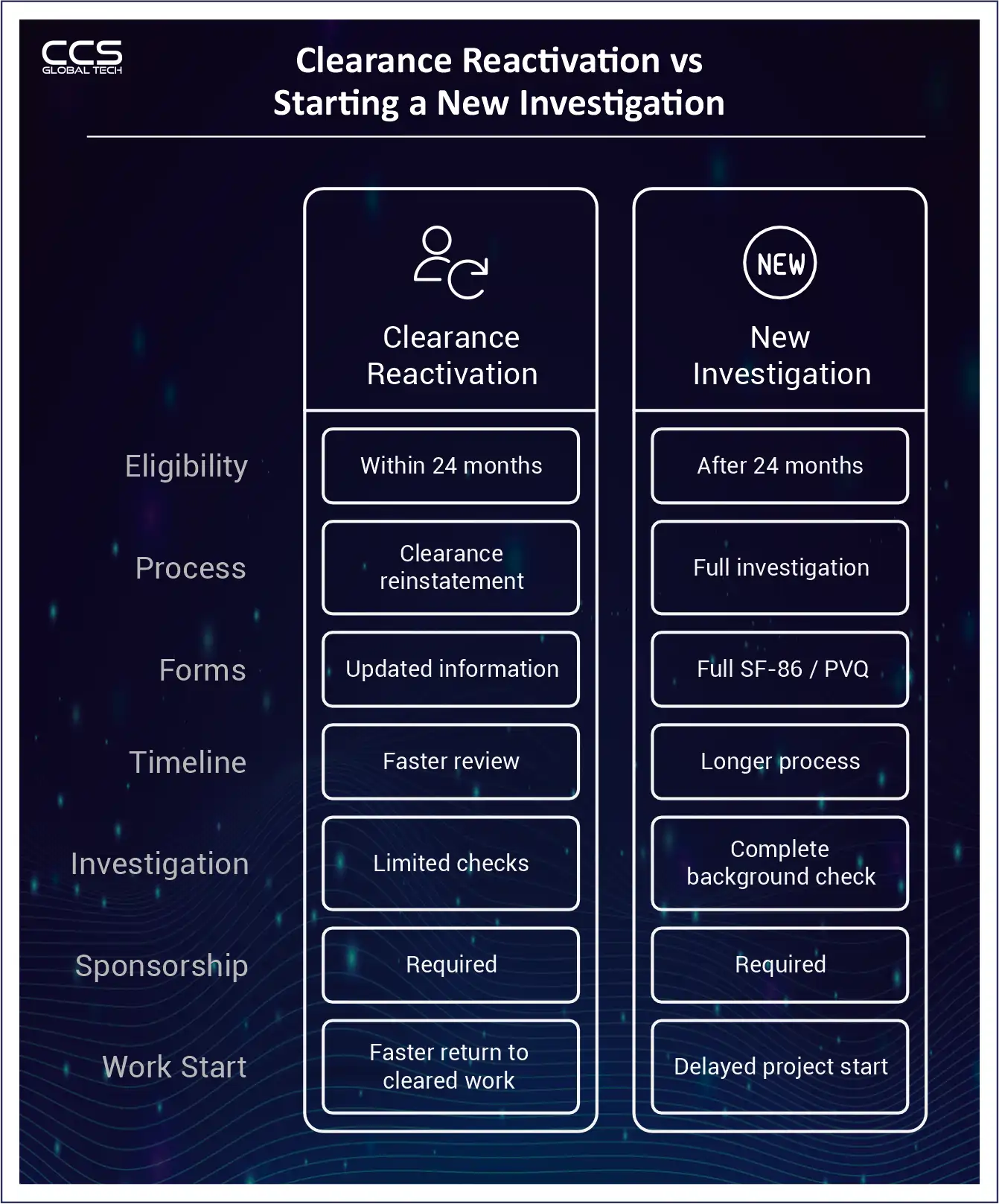
If you leave a cleared position | Clearance becomes inactive and enters a 24-month window before it is considered expired. After 24 months without sponsorship, reactivation requires a new investigation. |
The 24-Month Rule That Changes Everything

Two Stories That Illustrate the Stakes
A program manager at a mid-size defense IT firm held a Top Secret clearance for eleven years. When her company lost a major DoD contract, she transitioned to a commercial cybersecurity firm – a role that did not require her clearance. The work was good. The pay was better. She kept meaning to find a cleared position “eventually.”
Twenty-seven months later, her original firm won a new contract and reached out about a senior role that would have been a natural fit. When the recruiter attempted to verify her clearance status, the eligibility had been inactive for over two years. The 24-month window had closed. What should have been a straightforward reinstatement became a full new investigation: a new SF-86, field interviews, and an estimated wait of six to nine months before she could work on the classified portion of the contract.
The firm needed the role filled faster than that. They hired someone else. She eventually regained her clearance but at the cost of a significant career opportunity and months of lost earning potential in the cleared market.
How to Reactivate a Top Secret Clearance - Step by Step
- Determine your current eligibility status — Contact your most recent Facility Security Officer (FSO) or request verification through the DCSA portal to confirm whether your clearance is still within the 24-month reactivation window. This step is often skipped, and skipping it leads to expensive surprises.
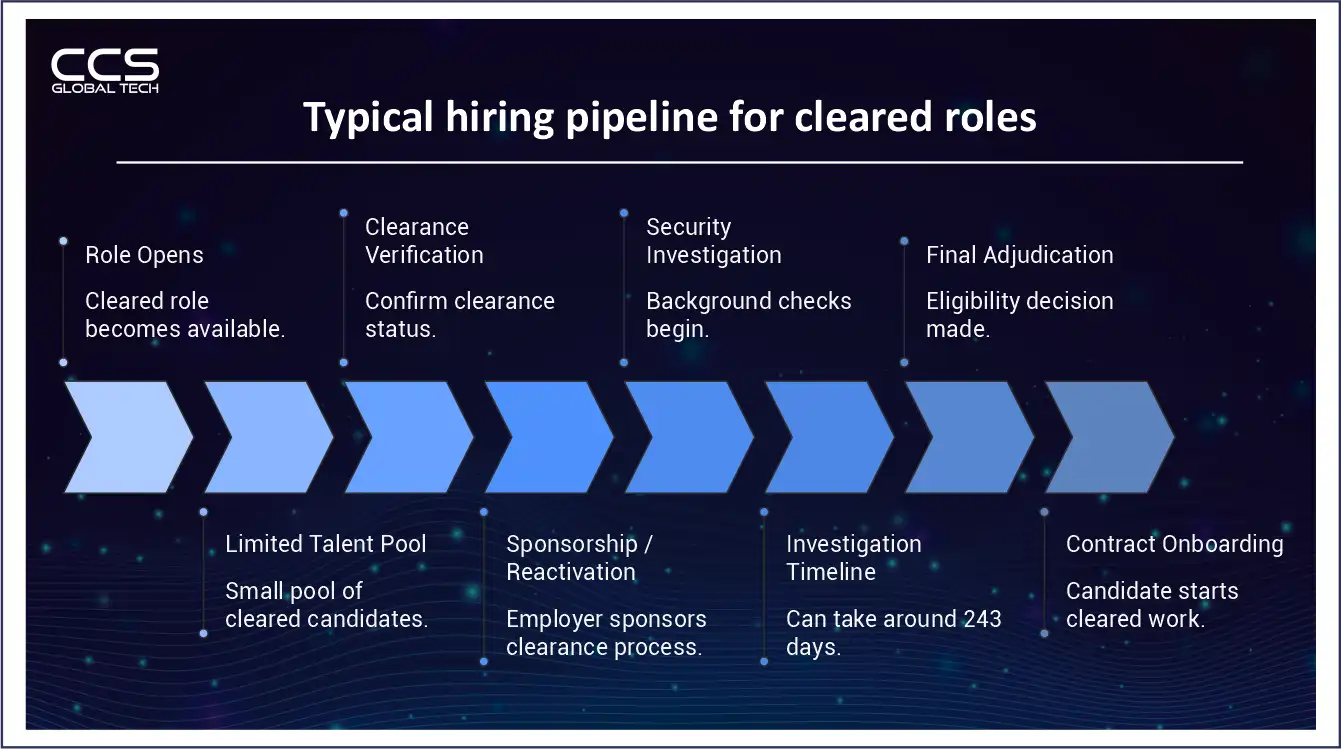
- Secure a cleared employer who will sponsor you — Reactivation cannot happen without sponsorship. A company must have a Facility Security Clearance, an open position requiring your level of clearance, and the willingness to submit a request for your reinstatement to DCSA on your behalf.
- Complete the required forms accurately — Within the 24-month window, this is typically a streamlined reinstatement process. Beyond 24 months, you will need to submit a full new SF-86 (or the forthcoming PVQ). Either way, accuracy and completeness are non-negotiable — discrepancies are one of the leading causes of delay and denial.
- Expect an updated investigation if significant time has passed — Even within the 24-month window, if your prior investigation is close to the five-year TS threshold or if adverse information has surfaced, DCSA may require a new field investigation before reinstating access. Budget time for this possibility.
- Prepare for continuous vetting enrollment — Once reinstated, your clearance will be enrolled in DCSA’s continuous vetting program — meaning ongoing monitoring of financial, criminal, and public records. Self-reporting obligations apply immediately.
- Maintain documentation proactively — Keep copies of your prior SF-86, any mitigation documents, FSO correspondence, and records of self-reporting. This documentation becomes critical if adverse information surfaces during continuous vetting.
Continuous Vetting: The New Reality for Cleared Professionals

Common Reasons Reactivation Gets Denied or Delayed
| DCSA Clearance Denial — Most Frequent Adjudicative Concerns |
|---|
|
Financial considerations | Unresolved debt, bankruptcies, patterns of financial irresponsibility — the most common single concern in denial decisions |
|
Personal conduct / dishonesty | False statements on the SF-86 are federal crimes. Omissions are treated as dishonesty in adjudication. |
|
Foreign influence | Undisclosed foreign contacts, dual citizenship issues, or foreign financial interests |
|
Drug involvement | Recent or habitual use — cannabis remains a federal concern regardless of state law |
|
Criminal conduct | Arrests, convictions, or patterns of behavior — not automatically disqualifying but requires full disclosure |
FAQs
Q1. How long does a Top Secret clearance remain valid after leaving a cleared job?
A – A Top Secret clearance can typically remain eligible for reactivation for up to two years after leaving a cleared position. During this time, the clearance is inactive but may be reinstated by a sponsoring employer.
Q2. Can a Top Secret clearance be reactivated after it becomes inactive?
A: Yes. If the clearance has been inactive for less than two years, a federal agency or government contractor can often reactivate it without starting the full investigation process again.
Q3. What happens if more than two years pass after leaving a cleared role?
A: If more than two years pass without holding a cleared position, the clearance usually expires and the individual may need to go through a new investigation and adjudication process.
Q4. Who can sponsor the reactivation of a Top Secret clearance?
A: Only a federal agency or an authorized government contractor can sponsor the reactivation of a Top Secret clearance. Individuals cannot reactivate their clearance independently.
Q5. How long does it usually take to reactivate a Top Secret clearance?
A: If the clearance is within the reinstatement window, reactivation may take a few weeks to a few months depending on the agency, background checks, and documentation requirements.
Q6. What paperwork is required to reactivate a Top Secret clearance?
A: Reactivation typically requires updating the SF-86 security clearance form and confirming personal, employment, and financial history for review by the sponsoring organization.
Q7. Can a Top Secret clearance be reactivated after a career break?
A: Yes. Many cleared professionals return to cleared roles after a career break if they are still within the two-year reinstatement window and meet eligibility requirements.
Q8. What factors can delay the reactivation of a Top Secret clearance?
A: Delays may occur due to incomplete forms, unresolved financial issues, foreign contacts requiring review, employment history gaps, or additional adjudication checks.
Q9. Does continuous vetting affect Top Secret clearance eligibility?
A: Yes. Under the federal government’s continuous vetting program, cleared individuals are monitored through automated checks that help agencies assess eligibility and support faster reinstatement.
Q10. Does changing employers affect an existing Top Secret clearance?
A: Changing employers does not cancel the clearance. The new employer simply needs to sponsor the transfer or reinstatement of the clearance within the allowed timeframe.